Bang Bang Chicken, known in Chinese as Bang Bang Ji (棒棒鸡), is a dish whose legacy reaches deeper into Sichuan’s culinary tradition than many modern diners realize. Today, the name is often associated with creamy mayonnaise-based sauces or deep-fried chicken bathed in sweet heat, but the original form is far older, far simpler, and far more nuanced. At its core, authentic Bang Bang Chicken is a cold, shredded chicken dish dressed in a complex, aromatic sauce built from sesame paste, soy sauce, vinegar, chili oil, and the unmistakable numbing spark of Sichuan peppercorn. It is a dish that invites contemplation: layers of fragrance and texture unfold gradually, each bite revealing why it has remained a staple of Sichuan’s culinary identity for more than a century.
The name itself, “Bang Bang,” stems from the rhythmic motion of pounding the cooked chicken with a wooden baton or stick—traditionally a small mallet or rolling pin—to loosen the fibers before shredding. In the days before high-volume commercial kitchens or mechanical shredding tools, tender poached chicken was placed on a chopping block and gently struck to create long, even strands that absorbed sauce beautifully. This process also gave street vendors a distinctive auditory signature. In late-nineteenth-century Sichuan market towns, the tapping sound of the baton against the cutting board told passersby that freshly prepared Bang Bang Chicken was ready to be served. This practical method eventually became the name of the dish itself.
What distinguishes authentic Bang Bang Chicken from related Sichuan cold dishes, such as Kou Shui Ji (Mouthwatering Chicken) or sesame chicken, is its balance of lightness and depth. The chicken is never fried, never heavily seasoned during cooking, and never soaked in oil. Instead, its mild flavor provides a neutral canvas for a sauce that is equal parts aromatic, spicy, nutty, and lightly sweet. The traditional version emphasizes Chinese sesame paste rather than peanut butter, homemade chili oil rather than generic chili sauce, and freshly roasted Sichuan peppercorns rather than pre-ground blends. These details, though seemingly small, profoundly shape the dish’s character.
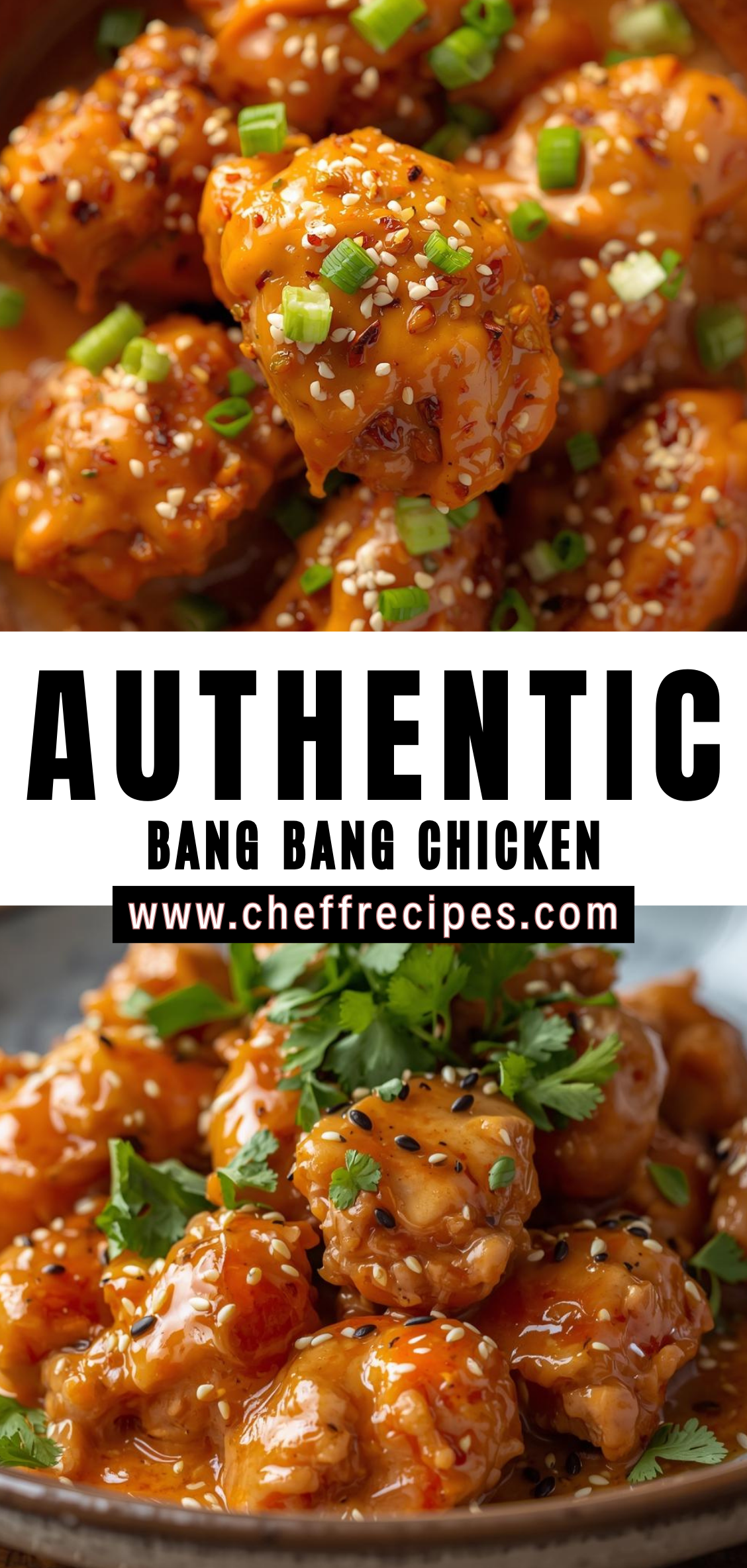
Over time, Bang Bang Chicken traveled far from its Sichuan origins. By the mid-twentieth century, it appeared in regional restaurants throughout China, each version reflecting local tastes. Outside China, especially in North America and Europe, the recipe underwent significant reinterpretation. Many Western adaptations swapped sesame paste for peanut-based dressings, replaced Sichuan peppercorn with chili flakes, or even transformed the cold shredded dish into a fried entrée. While these iterations have their merits and have introduced many diners to the concept of Bang Bang Chicken, they diverge sharply from the classical preparation.
This recipe, and the exploration that follows, returns to the authentic Sichuan version, grounded in traditional technique and regional flavor. It draws from historical records, culinary texts from Sichuan, and contemporary methods used by cooks in Chengdu and Leshan. It emphasizes the foundational techniques—proper poaching, pounding, shredding, and sauce balancing—that define the dish. Through these pages, the goal is not only to provide a recipe but to offer a deeper understanding of what makes Bang Bang Chicken a lasting icon of Sichuan cuisine, and why its simplicity continues to captivate cooks and diners alike.
Historical and Cultural Background
Understanding Bang Bang Chicken’s place within Sichuan cuisine requires looking beyond its flavor and into the cultural context that shaped it. Sichuan cuisine, renowned for its bold use of chili, fermented beans, garlic, and Sichuan peppercorn, is not a monolith but a rich mosaic of regional traditions that evolved over centuries. Cold dishes occupy a surprisingly important role in this culinary system. They serve not only as appetizers but as palate-structuring elements that balance richer, hotter dishes, particularly in the humid climate of central Sichuan where refreshing cool foods are welcomed.
Bang Bang Chicken has its deepest roots in Peng County (now part of Pengzhou) in Sichuan Province. Historical accounts suggest that by the late Qing Dynasty, this area was already recognized for its fine chicken dishes. Local poultry, raised on grain and outdoor forage, had a reputation for firm but tender meat, ideal for cold preparation. Food historians often trace the earliest form of Bang Bang Chicken to rural households where chickens were poached and shredded for celebratory meals. The pounding technique was born out of practicality: cleaving whole birds by hand into thin strips was laborious, particularly for large gatherings, and pounding loosened the muscle fibers, making shredding faster while improving the texture.
As Sichuan’s commercial networks grew in the late nineteenth and early twentieth centuries, street food culture expanded rapidly. Vendors often specialized in a single dish, perfecting a recipe and developing a loyal customer base. Bang Bang Chicken fit this world perfectly. It required inexpensive ingredients, minimal equipment, and could be prepared in batches early in the day. Only the final dressing of sauce needed to be done at the moment of sale. The vendor’s pounding technique became a recognizable auditory advertisement; in busy markets, the rhythmic clacking of the baton on the cutting board signaled fresh servings being prepared. Many older residents of Chengdu still recall this sound as part of the sensory landscape of their childhood markets.
The sauce, now seen as the hallmark of Bang Bang Chicken, also has a long lineage tied to Sichuan’s understanding of “stratified flavor.” Classical Sichuan cooking emphasizes the layering of salty, sour, spicy, nutty, and aromatic components so that none dominate but all contribute. Sesame paste, introduced to China centuries earlier from Central Asia, found a particularly strong home in Sichuan where it was used in hotpot dips, noodles, and cold dishes. Its rich nuttiness complemented the mild flavor of chicken, making it an ideal base for Bang Bang Chicken’s dressing. The addition of chili oil, vinegar, soy sauce, sugar, and Sichuan peppercorn created a balance that is unmistakably Sichuanese: stimulating but rounded, bold but never heavy.
During the Republican era (1912–1949), Bang Bang Chicken appeared in small restaurants, tea houses, and market stalls throughout Chengdu and Chongqing. It was considered an everyday dish, accessible to most families, but still refined enough to serve guests. At this point, the dish had already developed several regional variations. Some cooks emphasized more sesame paste for richness, others added extra vinegar for brightness, and some introduced small amounts of garlic or ginger for added complexity. However, the core technique—poaching, pounding, shredding, and serving cold with a sesame-chili sauce—remained consistent.
After the mid-twentieth century, as China underwent major social and economic changes, many traditional dishes shifted into home kitchens or small neighborhood eateries. Bang Bang Chicken persisted because it required no petroleum-based frying oils, no elaborate equipment, and no ingredients that were difficult to obtain. Families could prepare it using basic pantry staples, particularly once sesame paste and soy sauce became widely available in state-run stores.
The modern global reinterpretation of Bang Bang Chicken, particularly the fried, creamy version popularized in Western restaurants, emerged much later. These versions reflect shifts in culinary preferences abroad but diverge substantially from the dish’s Chinese origins. In contrast, the authentic Sichuan rendition still thrives in Chengdu’s markets, small eateries, and family kitchens, where it is appreciated for its clarity of flavor, its refreshing qualities, and its deep cultural resonance.
Authentic Bang Bang Chicken
Bang Bang Chicken, known in Chinese as Bang Bang Ji, is a dish whose legacy reaches deeper into Sichuan’s culinary tradition than many modern diners realize. Today, the name is often associated with creamy mayonnaise-based sauces or deep-fried chicken bathed in sweet heat, but the original form is far older, far simpler, and far more nuanced.
Ingredients
- For the Chicken
- 1 whole chicken breast (on the bone preferred) or 2 split breasts
- 2–3 slices ginger
- 2 scallions
- 1 Tbsp Shaoxing wine
- Water to cover
- Salt (small pinch)
- For the Dressing (Sesame & Chili Sauce)
- 2 Tbsp toasted sesame paste (zhi ma jiang)
- If using tahini, add a drizzle of toasted sesame oil for flavor.
- 1½ Tbsp light soy sauce
- 1 Tbsp Chinkiang black vinegar
- 1–2 tsp sugar (to taste)
- 1–2 cloves garlic, finely minced
- 1½–2 Tbsp chili oil with sediment (Lao Gan Ma or homemade Sichuan chili oil)
- 1–2 tsp Sichuan peppercorn oil or ¼ tsp ground roasted Sichuan pepper
- 1–2 Tbsp chicken poaching broth (to thin sauce)
- 1 tsp sesame oil (optional)
- Salt to taste
- For Serving
- Shredded cucumber
- Cilantro (optional)
- Toasted sesame seeds
- Additional chili oil
Instructions
1. Poach the chicken
- Place chicken in a pot with ginger, scallions, Shaoxing wine, salt, and enough water to cover by 1 inch.
- Bring to a simmer (do not boil aggressively).
- Cover, reduce heat to low, and gently poach for 12–15 minutes.
- Turn off heat and let rest in hot water for 10 minutes to finish cooking.
- Remove chicken, cool slightly, then bang it with a rolling pin or cleaver handle to loosen fibers.
- Shred by hand into thin strips.
2. Make the dressing
- In a bowl, whisk sesame paste with a spoonful of warm broth until smooth.
- Add soy sauce, black vinegar, sugar, garlic, chili oil, Sichuan peppercorn oil, and sesame oil.
- Adjust thickness and saltiness with additional broth, sugar, or soy sauce.
- Sauce should be pourable, fragrant, slightly numbing, and lightly sweet.
3. Assemble
- Arrange shredded cucumber on a plate.
- Add shredded chicken on top.
- Spoon sauce generously over the chicken.
- Garnish with cilantro, sesame seeds, and extra chili oil if desired.