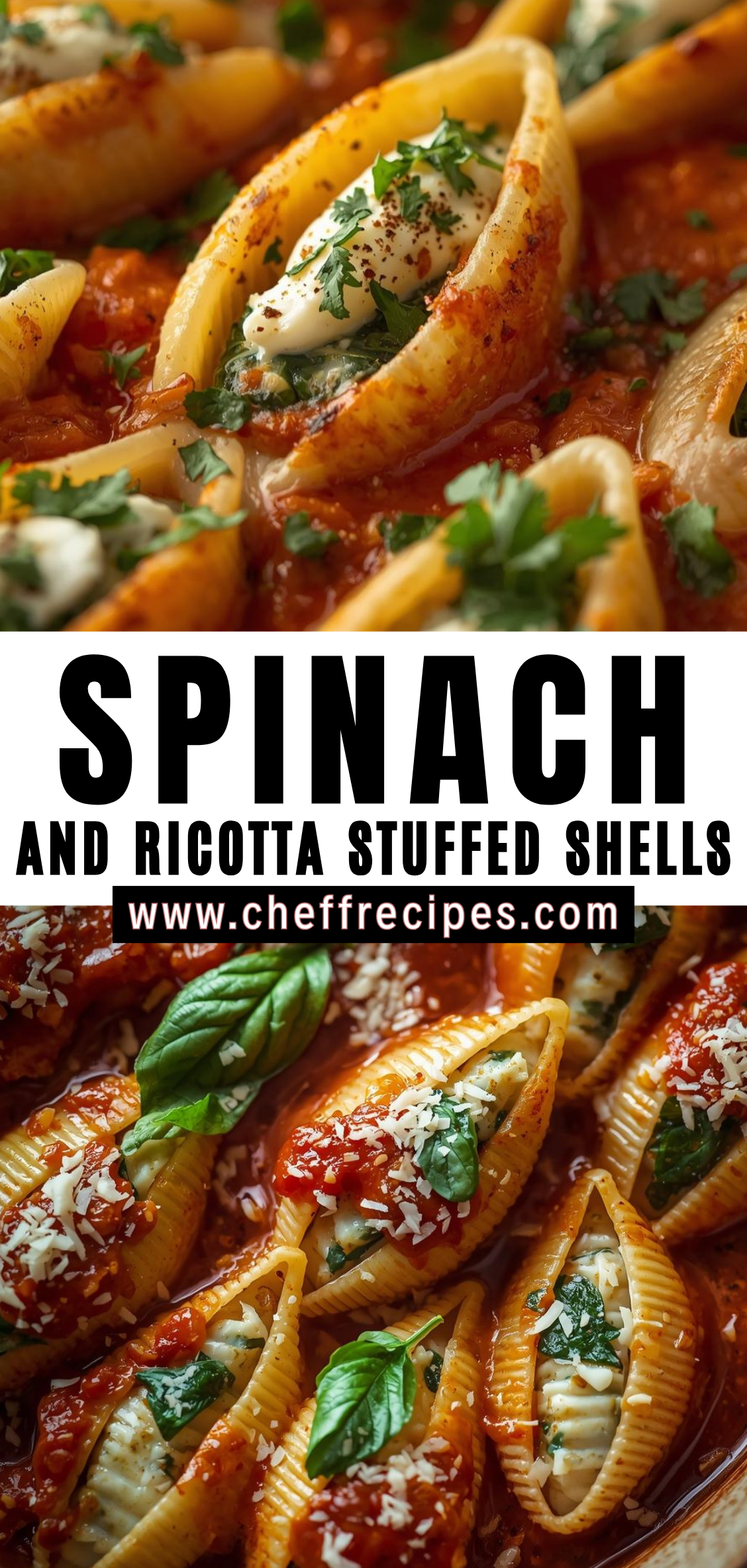
Spinach and Ricotta Stuffed Shells occupy a unique place in the landscape of Italian-American comfort cooking. They are at once elegant and approachable, celebratory yet practical, deeply rooted in tradition while adaptable enough for modern kitchens. The dish brings together classic elements of Italian cuisine—fresh pasta, soft cheese, vibrant greens, and slow-simmered tomato sauce—into a form that feels both familiar and festive. More than simply pasta filled with cheese, stuffed shells represent the intersection of texture, flavor, and culinary technique, creating a meal that is satisfying, nourishing, and deeply comforting.
The origins of stuffed pasta stretch back centuries. In Italy, dishes involving pasta filled with cheese, meat, or vegetables evolved through countless regional variations—ravioli in Liguria and Tuscany, tortellini in Emilia-Romagna, agnolotti in Piedmont, and cannelloni across several regions. While the specific large pasta shells used in this recipe, known as conchiglioni, are a relatively modern innovation, the concept of encasing a flavorful mixture inside pasta is one of the oldest traditions in Italian cooking. Spinach and ricotta, in particular, form one of the most classic pairings. Ricotta provides a mild, creamy richness, while spinach contributes earthiness and depth, creating a balance that has made the combination a staple in dishes such as cannelloni, lasagna, and stuffed pastas.
When Italian immigrants began establishing communities in the United States in the late nineteenth and early twentieth centuries, they brought with them the foundations of these culinary traditions. Over time, Italian-American cuisine emerged as a distinct style, defined by both preservation and adaptation. Ingredients like ricotta, mozzarella, and dried pasta became widely accessible, and tomato sauce—already essential in southern Italian cooking—became even more central in the American context. Conchiglioni, the oversized pasta shells, gained popularity because they were versatile and suited to baking, a technique deeply embraced in American kitchens for its practicality and crowd-pleasing results.
Spinach and Ricotta Stuffed Shells reflect this evolution. The dish mirrors the depth and warmth of traditional Italian cooking while benefiting from the American love of oven-baked casseroles and generous portions. The result is a meal that feels homey and substantial, whether served on a busy weeknight, prepared ahead for a family gathering, or brought to a potluck. It is a dish that invites sharing. The baking dish becomes a centerpiece—steaming, aromatic, layered with sauce and cheese—encouraging friends and family to gather and serve themselves.
One of the reasons the dish is so enduring is its perfect balance of simplicity and refinement. On the one hand, the ingredients are straightforward and affordable. Ricotta, spinach, shells, tomato sauce, garlic, herbs, and a finishing layer of mozzarella or Parmesan are staples that require no specialized shopping. The technique, too, is accessible: cook the shells, prepare the filling, assemble, and bake. On the other hand, the flavors and textures that emerge are anything but ordinary. The ricotta becomes lush and velvety in the oven. The spinach adds body and contrast. The pasta shells soften into tender pockets. The sauce melds everything together, infusing the dish with warmth and acidity that brighten the creamy filling. The final baked cheese creates a golden, slightly crisp top that contrasts beautifully with the softness beneath.
Another strength of Spinach and Ricotta Stuffed Shells lies in its adaptability. It can accommodate a wide range of variations—additional vegetables, different cheeses, fresh herbs, or even plant-based modifications—while preserving its essential character. It scales easily for large gatherings and can be prepared in advance, making it ideal for entertaining or meal-prepping. It freezes remarkably well, retaining its structure and flavor even after baking or during extended storage. In a world where convenience often dictates meal choices, the ability to prepare a dish ahead without compromising quality is a significant advantage.
Beyond practicality, the dish satisfies a deeper culinary desire: the pleasure of assembling something by hand. Unlike many quick weeknight meals, stuffed shells encourage a slower, more deliberate process. Filling each pasta shell, arranging them carefully in a dish, and layering sauce and cheese over the top creates a sense of participation, of crafting something with intention. This tactile quality adds meaning to the meal; each shell becomes a small vessel of care and attention.
Ultimately, Spinach and Ricotta Stuffed Shells represent what home cooking does best. They are comforting without being heavy, simple without being plain, traditional without being rigid. The dish brings together familiar ingredients in a way that feels timeless, offering nourishment not only through flavor but through the ritual of preparation and the joy of sharing. Whether you are new to cooking, a seasoned home chef, or simply someone who appreciates a well-made meal, Spinach and Ricotta Stuffed Shells invite you into a tradition that continues to evolve while remaining grounded in the pleasures of good food.
Historical and Cultural Background
While Spinach and Ricotta Stuffed Shells are widely recognized today as a classic Italian-American comfort dish, their origins lie within a broader lineage of stuffed pasta traditions that extend deep into Italy’s culinary past. Understanding this landscape provides context for how a dish built on simple ingredients came to represent both heritage and adaptation in modern kitchens.
The Roots of Stuffed Pasta in Italy
Stuffed pasta is one of the oldest and most geographically varied categories of Italian cuisine. Its origins are intertwined with the development of wheat cultivation, dairy production, and regional cooking techniques that emerged long before Italy became a unified nation. Each region developed its own form of filled pasta, shaped by local agriculture and cultural exchange.
In northern Italy, butter-rich regions such as Emilia-Romagna and Lombardy produced tortellini, tortelli, and ravioli filled with ingredients like Parmigiano-Reggiano, greens, veal, mortadella, or squash. In Liguria, ravioli often featured a delicate blend of ricotta and wild herbs, reflecting the region’s abundant hillside vegetation. In central Italy, spinach and ricotta became especially prominent, particularly within Tuscany and Lazio, where both ingredients were widely available and frequently paired.
Stuffed pasta was historically associated with special occasions. The labor involved in kneading dough, rolling it by hand, shaping each piece, and preparing fillings meant that dishes like ravioli or tortelloni were often reserved for Sundays or holidays. Families would gather to help, with the communal preparation becoming a beloved tradition. Even as industrial pasta production expanded in the twentieth century, this association between filled pasta and celebration remained strong.
The Rise of Conchiglioni
The large pasta shells used in Spinach and Ricotta Stuffed Shells, known as conchiglioni, emerged significantly later than traditional stuffed pastas. Their shape—modeled after a seashell—reflects southern Italy’s connection to the Mediterranean. While smaller shells, conchiglie, were widely used for soups and sauces, the oversized conchiglioni represent a modern expansion of the idea, designed specifically with stuffing and baking in mind.
By the mid-twentieth century, conchiglioni became popular among home cooks in Italy who wanted to combine the satisfaction of stuffed pasta with the convenience of oven baking. Rather than shaping dozens of small ravioli, a cook could fill larger shells with creative mixtures—meat-based, cheese-based, vegetable-based—and bake them in sauce. This shift echoed a broader cultural adaptation toward quicker, more efficient home cooking during the postwar era.
Migration and the Birth of Italian-American Cuisine
When Italian immigrants arrived in the United States between the late 1800s and early 1900s, they brought with them not only ingredients and recipes but a philosophy of cooking grounded in frugality, comfort, and flavor. However, the America they encountered offered both limitations and opportunities. Ingredients such as ricotta, mozzarella, canned tomatoes, and dried pasta were relatively accessible, which allowed key elements of Italian culinary identity to remain intact.
At the same time, the American pantry introduced new possibilities. The widespread availability of ovens, which were not nearly as common in many rural Italian homes, encouraged baking as a primary cooking method. Tomato sauces grew sweeter and richer. Cheese became more prominent, reflecting American tastes and the abundance of dairy products. These developments gave rise to iconic Italian-American dishes such as lasagna with multiple layers of cheese, baked ziti, and stuffed shells.
Spinach and Ricotta Stuffed Shells developed naturally within this context. They embodied the heart of Italian tradition—pasta, cheese, greens, tomato sauce—while embracing the American affinity for oven-baked casseroles and generous portions. The dish soon became a staple of family gatherings, potlucks, and holiday meals. Its ease of preparation and impressive appearance made it particularly popular among home cooks seeking a dish that looked labor-intensive without requiring advanced techniques.
The Evolution of Ricotta and Spinach as a Pairing
The pairing of ricotta and spinach predates the creation of stuffed shells by centuries. In Italy, the combination is considered elemental. Ricotta, prized for its soft, creamy consistency and delicate flavor, has been produced since ancient times. Spinach, though not native to Italy, became widely integrated into Italian cuisine during the Middle Ages following its introduction from the Middle East. Its mild bitterness and rich mineral profile offered a perfect counterpoint to ricotta’s sweetness.
Together, ricotta and spinach formed fillings for tortelloni, cannelloni, and crespelle (Italian crepes), as well as pastries and savory pies in various regions. Their compatibility made them ideal candidates for new pasta formats introduced later, including conchiglioni.
Stuffed Shells in Contemporary Cuisine
Today, Spinach and Ricotta Stuffed Shells represent a convergence of tradition, innovation, and practicality. The dish aligns with contemporary values in home cooking:
-
Flexibility. It can be vegetarian, enhanced with meat, or modified to accommodate dietary preferences.
-
Make-ahead potential. It freezes well both before and after baking, making it suitable for meal prep.
-
Scalability. It can be prepared in small batches for couples or in large trays for gatherings.
-
Comfort and nourishment. The creamy filling, tender pasta, and hearty tomato sauce align with the modern appetite for wholesome comfort food.
Spinach and Ricotta Stuffed Shells
Spinach and Ricotta Stuffed Shells occupy a unique place in the landscape of Italian-American comfort cooking. They are at once elegant and approachable, celebratory yet practical, deeply rooted in tradition while adaptable enough for modern kitchens. The dish brings together classic elements of Italian cuisine—fresh pasta, soft cheese, vibrant greens, and slow-simmered tomato sauce—into a form that feels both familiar and festive. More than simply pasta filled with cheese, stuffed shells represent the intersection of texture, flavor, and culinary technique, creating a meal that is satisfying, nourishing, and deeply comforting.
Ingredients
- For the Shells & Filling
- 20–24 jumbo pasta shells
- 1 (15 oz) container ricotta cheese
- 1½ cups shredded mozzarella, divided
- ½ cup grated Parmesan
- 1 large egg
- 2 cups packed fresh spinach, chopped
- or substitute 10 oz frozen spinach, thawed and well-drained
- 2 cloves garlic, minced
- 1 tsp Italian seasoning
- ½ tsp salt
- ¼ tsp black pepper
- Pinch of nutmeg (optional but traditional)
- For the Sauce
- 3 cups marinara sauce (homemade or jarred)
- ½ cup water (helps keep shells moist during baking)
- Fresh basil or parsley for garnish (optional)
Instructions
1. Cook the shells
- Preheat oven to 375°F (190°C).
- Cook pasta shells in salted water 2 minutes less than package directions (they will finish in the oven).
- Drain and spread on a tray to cool so they don’t stick.
2. Make the filling
- In a large bowl, mix ricotta, 1 cup mozzarella, Parmesan, egg, spinach, garlic, Italian seasoning, salt, pepper, and nutmeg.
- Taste and adjust seasoning (you can taste safely before adding the egg if preferred).
3. Build the dish
- Spread 1½ cups marinara over the bottom of a 9×13 baking dish.
- Fill each shell with 2–3 tablespoons of the ricotta mixture and place seam-up in the dish.
- Spoon remaining marinara over the top.
- Pour the ½ cup water around the edges of the dish.
- Cover with foil.
4. Bake
- Bake covered for 25 minutes.
- Remove foil, top with remaining ½ cup mozzarella, and bake uncovered 5–10 minutes more until bubbly and lightly browned.
5. Serve
Let rest 5 minutes before serving. Garnish with basil or parsley.