There are stir-fries… and then there is Kung Pao Chicken, the iconic dish that represents the heart of Sichuan cuisine—fiery, tingly, savory, sweet, sour, nutty, aromatic, and irresistibly addictive. And when you take that legendary flavor profile and toss it with bouncy, slurp-worthy noodles?
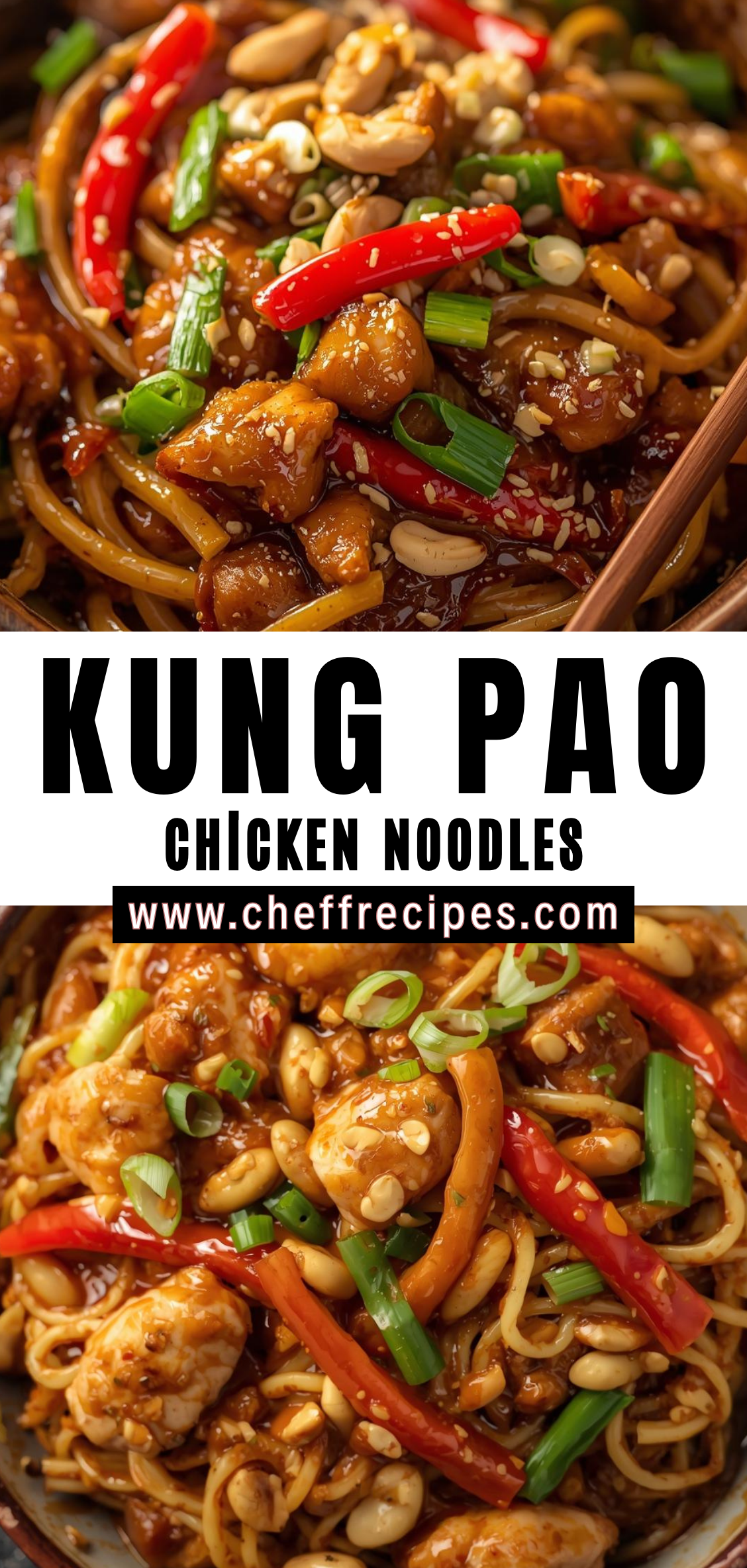
You create something even more crave-worthy: Kung Pao Chicken Noodles, the perfect marriage of heat, texture, and wok-fired depth.
This post is your comprehensive, 6,000-word masterclass on Kung Pao Chicken Noodles—its origins, its flavor philosophy, its techniques, its science, and a step-by-step recipe that brings restaurant-level results to your home kitchen.
Whether you are an enthusiastic home cook, a food blogger, a culinary student, or someone who simply loves bold, beautifully balanced stir-fries, you’re about to learn everything that goes into making truly exceptional Kung Pao Chicken Noodles.
🌶️ Part I — The History of Kung Pao: From Imperial Court to Global Icon
Kung Pao Chicken originates from Sichuan Province in China, a region known for:
-
bold chilies
-
fragrant garlic
-
deep umami
-
and the famous mala sensation: hot & numbing
🔹 The Name “Kung Pao”
“Kung Pao” (宫保 / Gong Bao) honors Ding Baozhen, a Qing Dynasty official and governor of Sichuan admired for his leadership. His title was “Gongbao,” or “Palace Guardian,” which eventually became the name of the dish created in his honor.
🔹 Traditional Kung Pao Chicken
The OG dish includes:
-
diced chicken
-
Sichuan peppercorns
-
dried red chilies
-
peanuts
-
Shaoxing wine
-
soy sauce
-
black vinegar
-
sugar
-
aromatics
🔹 Evolution into Kung Pao Noodles
As Chinese cuisine globalized, chefs began adapting traditional dishes to include noodles, which:
-
absorb sauce better
-
feel comforting and hearty
-
create a complete meal in one bowl
Kung Pao Chicken Noodles combine centuries of Sichuan flavor tradition with modern Asian-fusion creativity.
🍜 Part II — What Makes Kung Pao Chicken Noodles Special?
Kung Pao Chicken Noodles uniquely balance the Five Pillars of Sichuan Flavor:
1️⃣ Spicy (La)
From dried red chilies and chili paste.
2️⃣ Numbing (Ma)
From the essential Sichuan peppercorn (huajiao), which creates that electrifying tingling sensation.
3️⃣ Sweet
Sugar balances the heat.
4️⃣ Tangy
Black vinegar gives depth and brightness.
5️⃣ Savory (Umami)
Soy sauce, garlic, and chicken bring depth.
Wrap those flavors around chewy noodles and tender chicken and you get a dish that is:
-
comforting
-
stimulating
-
aromatic
🍗 Part III — Ingredient Deep Dive (What Each Ingredient Does)
🔥 1. Chicken
Thighs work best:
-
juicier
-
more forgiving
-
more flavorful
Breasts work too—just don’t overcook.
🌶️ 2. Dried Red Chilies
Not all chilies are equal.
Look for:
-
Sichuan dried chilies (facing heaven chilies)
-
Arbol chilies (if substituting)
Seeds = heat.
Remove seeds for milder heat.
🌿 3. Aromatics
Kung Pao relies on:
-
garlic
-
ginger
-
scallions
These create the “bouquet” of the dish—the first aroma that hits your nose.
🥜 4. Peanuts
Roasted, unsalted peanuts add:
-
crunch
-
nutty depth
-
traditional authenticity
🥣 5. The Sauce (The Soul)
Kung Pao sauce includes:
-
soy sauce
-
dark soy
-
black vinegar
-
rice vinegar
-
Shaoxing wine
-
chili paste
-
brown sugar
-
cornstarch
This creates:
-
glossy texture
-
syrupy cling
-
sweet-savory-spicy balance
🍜 6. The Noodles
The best noodles:
-
wheat lo mein
-
udon
-
spaghetti (surprisingly excellent)
-
rice noodles (gluten-free version)
The key = stir-fry friendly texture.
🔥 Part IV — Wok Science: Understanding Heat, Oil & Movement
Kung Pao Chicken Noodles rely on the technique of wok hei—“breath of the wok.”
This requires:
-
very high heat
-
fast cooking
-
constant movement
-
thin oil layer
-
proper timing
Key principles:
🔸 Preheat wok fully
A cold wok = soggy stir-fry.
A hot wok = sear + char + flavor.
🔸 Add ingredients in the correct order
-
Oil
-
Chilies + peppercorns
-
Chicken
-
Aromatics
-
Vegetables
-
Noodles
-
Sauce
-
Peanuts
🔸 Avoid crowding
Crowding steams food instead of searing.
🔸 Finish quickly
A stir-fry is a sprint, not a marathon.
🧂 Part V — The Ultimate Kung Pao Chicken Noodles Recipe
🍳 Step-by-Step Directions (Professional Chef Method)
STEP 1 — Prep the Chicken
Combine chicken with marinade and set aside 10 minutes.
STEP 2 — Cook the Noodles
Cook until just al dente.
Overcooked noodles will fall apart during stir-fry.
Rinse with cold water to stop cooking.
STEP 3 — Mix the Sauce
Whisk all sauce ingredients until smooth.
STEP 4 — Heat the Wok
High heat.
Let it smoke lightly.
Add oil.
STEP 5 — Fry Chilies & Peppercorns
Stir 10–15 seconds until fragrant.
The kitchen will smell amazing.
STEP 6 — Sear the Chicken
Spread chicken in a single layer.
Cook 3–4 minutes.
STEP 7 — Add Garlic, Ginger & Scallions
Stir 20–30 seconds.
Do not burn garlic.
STEP 8 — Add Vegetables
Bell peppers add color + crunch.
STEP 9 — Add Noodles
Toss vigorously.
STEP 10 — Pour Sauce
Stir until glossy and thick.
STEP 11 — Add Peanuts & Serve
Top with peanuts and scallions.
Perfect balance of:
-
heat
-
crunch
-
chew
-
aroma
🍥 Part VI — Texture, Flavor & Aroma Breakdown
Kung Pao Chicken Noodles are a multisensory experience.
🔸 Texture
-
Tender chicken
-
Crunchy peanuts
-
Chewy noodles
-
Crisp peppers
-
Fragrant toasted chilies
🔸 Flavor
-
Spicy
-
Numbing
-
Sweet
-
Tangy
-
Savory
-
Smoky
🔸 Aroma
-
Chili fragrance
-
Sichuan pepper citrus notes
-
Hot oil release
-
Garlic + ginger bloom
This dish is alive with contrasts.
🧪 Part VII — The Science of Kung Pao Sauce
Kung Pao sauce works because of four scientific principles:
1. Emulsification
Cornstarch ties oil + liquid together.
2. Caramelization
Sugar caramelizes as sauce hits hot wok.
3. Starch Thickening
Cornstarch gelatinizes, creating shine.
4. Heat Activation
Sichuan peppercorn’s numbing compounds activate at high temperatures.
🍜 Part VIII — Choosing the Right Noodles
Your noodle choice changes the entire personality of the dish.
⭐ Lo Mein
Best all-around.
⭐ Udon
Chewy, thick, satisfying.
⭐ Shanghai Noodles
Buttery and perfect for wok frying.
⭐ Spaghetti
Great Western adaptation—absorbs sauce beautifully.
⭐ Rice Noodles
Gluten-free option.
🔥 Part IX — Variations
1. Kung Pao Shrimp Noodles
Faster cooking, lighter, sweeter.
2. Kung Pao Beef Noodles
Richer, deeper umami.
3. Vegetarian Kung Pao Noodles
Replace chicken with:
-
tofu
-
tempeh
-
mushrooms
4. Cashew Kung Pao Noodles
Swap peanuts with cashews.
5. Extra Spicy Version
Add chili oil, fresh chilies, or doubanjiang.
🛠️ Part X — Troubleshooting Guide
Problem: Noodles are mushy
Solution:
-
Undercook next time
-
Rinse with cold water
-
Add noodles last
Problem: Sauce too thick
Add 1–2 tbsp water.
Problem: Not enough heat
Add chili paste or chili flakes.
Problem: Bitter flavor
You burned the chilies—reduce to low heat at that stage.
Problem: Chicken watery
Pan was too crowded.
❓ Part XI — FAQs
Can I make this without Sichuan peppercorns?
Yes, but you’ll miss the signature numbing effect.
Can I make it vegetarian?
Easily—use tofu and mushroom.
Can I meal prep this?
Yes—just store noodles and sauce separately.
Can I control the heat?
Remove chili seeds for milder heat.
🧾 Printable Recipe Card
Kung Pao Chicken Noodles
Ingredients:
Chicken, noodles, garlic, ginger, scallions, peppers, dried chilies, peanuts, soy sauce, vinegars, Shaoxing wine, sugar, cornstarch.
Steps:
-
Marinate chicken
-
Cook noodles
-
Mix sauce
-
Wok-fry chilies & peppercorns
-
Sear chicken
-
Add aromatics
-
Add vegetables
-
Add noodles
-
Add sauce
-
Toss in peanuts
-
Serve hot
🎉 Final Thoughts
Kung Pao Chicken Noodles are more than a recipe—they’re a story of Sichuan tradition, wok science, heat balance, and culinary creativity. Every bite packs spice, texture, aroma, contrast, and joy.
Kung Pao Chicken Noodles
A spicy, savory-sweet stir-fry made with tender chicken, chewy noodles, crunchy peanuts, and crisp veggies tossed in a glossy Kung Pao sauce. Inspired by the classic Sichuan dish but adapted into a fast, satisfying noodle bowl.
Ingredients
- For the Chicken
- 1 lb (450 g) chicken breast or thighs, thinly sliced
- 1 tbsp soy sauce
- 1 tsp cornstarch
- 1 tsp oil
- Kung Pao Sauce
- ¼ cup soy sauce
- 2 tbsp rice vinegar
- 1–2 tbsp hoisin sauce
- 1 tbsp brown sugar (or honey)
- 1 tbsp chili garlic sauce (or sambal)
- 1 tbsp Shaoxing wine (optional)
- 1 tsp sesame oil
- 1 tsp cornstarch
- Optional: 1–2 tsp Sichuan peppercorns, ground (for the signature numbing heat)
- Noodles + Veggies
- 8 oz (225 g) lo mein noodles, rice noodles, or spaghetti
- 1 bell pepper, diced
- 1 small zucchini or carrot, sliced
- 3–4 green onions, chopped
- 3–4 dried red chiles (optional)
- 3 cloves garlic, minced
- 1 inch ginger, grated
- ⅓ cup roasted peanuts
Instructions
1. Prep the Chicken
- Toss sliced chicken with soy sauce, cornstarch, and oil.
- Let sit while you prepare other ingredients.
2. Mix the Sauce
Whisk all sauce ingredients together until smooth. Set aside.
3. Cook the Noodles
Cook according to package directions. Drain and toss lightly with oil to prevent sticking.
4. Stir-Fry
- Heat a large skillet or wok over medium-high.
- Add a little oil and cook chicken 3–4 minutes, until browned and mostly cooked.
- Add garlic, ginger, dried chiles, and veggies. Stir-fry 2–3 minutes.
- Add cooked noodles, pour in the Kung Pao sauce, and toss everything for 1–2 minutes until glossy and thickened.
- Stir in peanuts and green onions at the end.
5. Serve
Enjoy hot with extra peanuts, chili flakes, or a drizzle of chili oil.
Notes
- Heat control:
- Protein swaps: Shrimp, tofu, or pork work great.
- Veggie options: Broccoli, snap peas, mushrooms, cabbage, or baby corn.
- Make ahead: Sauce can be mixed 3–4 days in advance.
- Gluten-free: Use GF tamari and rice noodles.