Few dishes capture the universal joy of shared meals quite like pizza. Its history spans centuries and continents, embodying a culinary evolution shaped by migration, resourcefulness, and the simple human desire for food that brings people together. While traditional pizzas are celebrated for their balanced layers of dough, sauce, cheese, and toppings, a Beef Pizza stands out as a heartier, bolder interpretation of the classic. It takes the reliable comfort of a beloved dish and elevates it with the richness and depth of seasoned beef, turning a universally familiar food into something both striking and deeply satisfying.
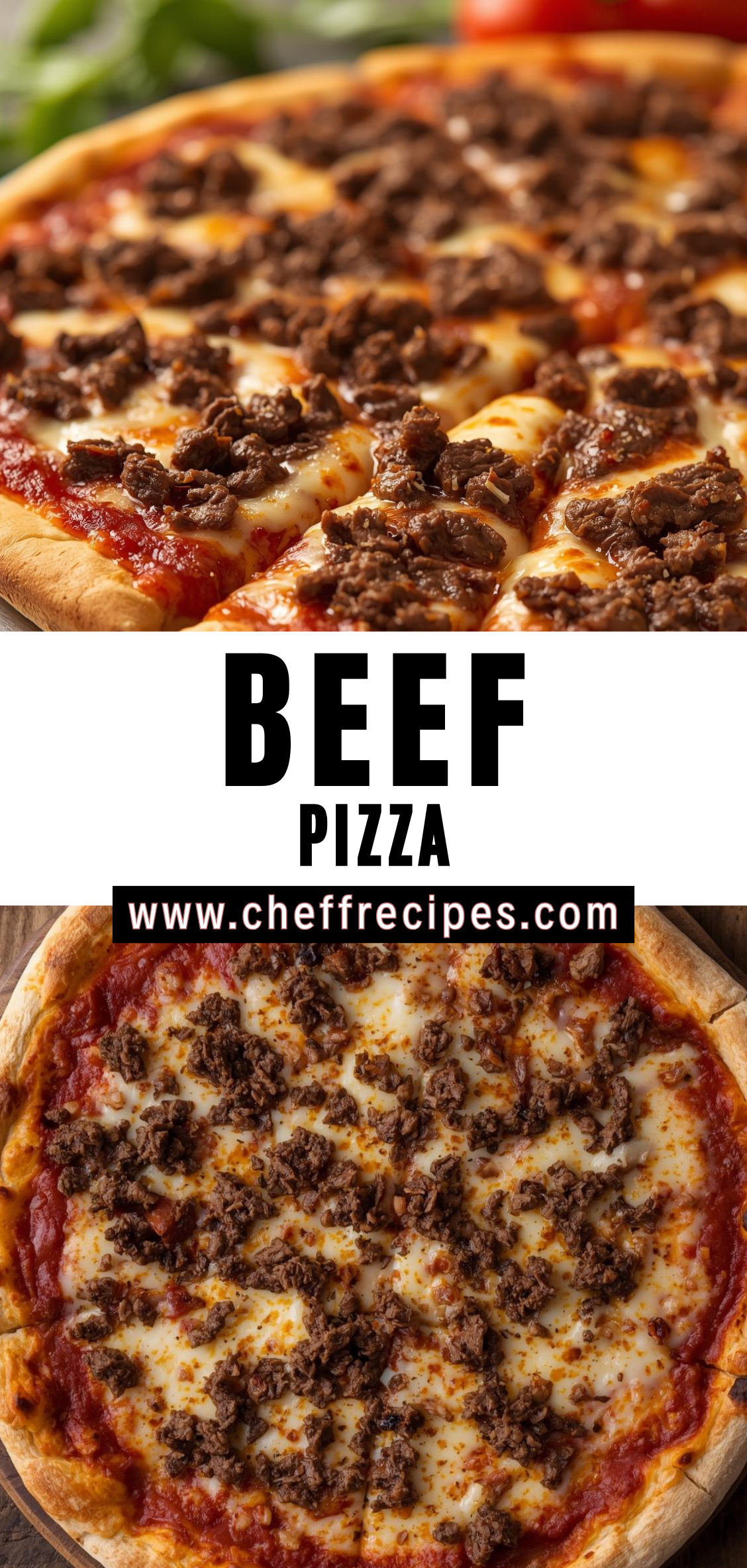
The concept of pairing beef with pizza is not new, yet it remains curiously underexplored compared to its more common companions like pepperoni, sausage, or vegetables. Beef, when prepared correctly, brings a flavor profile unmatched by other toppings: a savory, robust presence that can be delicately seasoned, boldly spiced, or infused with aromatic herbs depending on the cook’s intention. In a culinary world that constantly pushes boundaries, a Beef Pizza offers a canvas for creativity while staying anchored in comforting, recognizable tradition.
This recipe celebrates the art of building flavor from the ground up. Rather than simply scattering cooked beef over a pizza base, this approach treats each component with respect and intention. The dough, for example, is not merely a vehicle for toppings but a foundational element whose texture, elasticity, and flavor influence the entire experience. Whether you choose a classic Neapolitan-style crust, an American pan crust, or a hybrid style that combines chewiness with crispness, the dough deserves care and attention, for it is the first element your teeth meet and the last impression left on the palate.
Next, there is the sauce. A tomato base provides acidity, sweetness, and brightness that cut through the richness of beef. But not all sauces are created equal. The best tomato sauce for a Beef Pizza is balanced, simmered long enough to develop depth yet fresh enough to complement rather than overshadow the other ingredients. Seasonings like garlic, oregano, basil, chili flakes, or even smoked paprika can guide the sauce toward a flavor profile that harmonizes with the beef. The sauce acts not only as a binder but as a mediator, bridging the gap between dough and toppings.
Then comes the cheese, the element that defines pizza both visually and texturally. Mozzarella is traditional for its melting qualities, but incorporating cheeses such as provolone, cheddar, parmesan, or asiago creates complexity and richness. Cheese provides the sensual, molten layer that unifies the pie, offering smoothness and contrast against the textured beef. No Beef Pizza is complete without thoughtful cheese selection and strategic layering.
But the heart of this recipe is, of course, the beef itself. Beef requires technique. It must be browned properly to develop the Maillard reaction—the chemical transformation that creates deep, savory flavor. It must be drained so its natural juices do not compromise the structural integrity of the pizza. It must be seasoned thoughtfully, crafted with enough intensity to hold its own against tomato sauce and cheese, but not so heavily spiced that it overpowers them.
When beef is treated not just as a topping but as a pivotal flavor element, it transforms the pizza into a more substantial, satisfying dish. A well-seasoned beef topping brings warmth, comfort, and a hint of indulgence, making this pizza suitable for family dinners, gatherings, celebrations, or simply a night when ordinary meals need to be elevated.
This recipe goes beyond a standard kitchen guide. It aims to teach technique, encourage creativity, and inspire confidence, whether you are an ambitious home cook or a seasoned culinary enthusiast. Over the next sections—ingredients, preparation methods, dough techniques, sauce building, beef seasoning, assembly, baking strategies, variations, and troubleshooting—you will learn not just how to make a Beef Pizza, but how to understand it.
Detailed Instructions for Making Beef Pizza
These instructions are written with depth and clarity, suitable for both advanced cooks and ambitious beginners. They cover every stage of the process: dough, sauce, beef preparation, assembling, baking, and finishing. Each step includes technique notes, troubleshooting guidance, and professional-level details.
1. Preparing the Dough
The dough is the backbone of your Beef Pizza. The goal is to create a crust that is flavorful, tender yet crisp, structured enough to carry beef, cheese, and sauce without sagging, and aromatic when baked. You can use a classic pizza dough style or a hybrid version; here we focus on a refined, artisan-style dough.
1.1 Measuring and Organizing Your Ingredients
Before any mixing begins:
-
Measure the flour using a scale if possible. Accurate measurement ensures consistency in hydration.
-
Set out salt, yeast, sugar, olive oil, and warm water.
-
Ensure all ingredients are at room temperature unless otherwise stated.
Organizing ingredients reduces mistakes and creates a smoother workflow.
1.2 Activating the Yeast
-
Heat water until warm—about 100–110°F. Too hot will kill the yeast; too cool will prevent activation.
-
Add the sugar and stir until dissolved.
-
Sprinkle the active dry yeast or instant yeast over the water.
-
Let it sit for 5–10 minutes.
-
When a creamy, foamy layer forms on top, the yeast is ready. A flat mixture indicates dead yeast and requires starting over.
1.3 Combining the Dry Ingredients
-
In a large bowl, whisk together flour and salt.
Salt regulates yeast activity and enhances flavor. -
Form a well in the middle of the flour mixture to make combining easier.
1.4 Creating the Dough
-
Pour the activated yeast mixture into the well.
-
Add the olive oil.
-
Stir gradually from the center outward, drawing flour into the liquid.
-
When the dough becomes shaggy, transfer it to a clean, lightly floured surface.
-
Begin kneading. Use a push-fold-turn motion, applying even pressure.
1.5 Kneading Technique
Knead for 8–12 minutes. The dough will transform:
-
From sticky → tacky → smooth
-
From tearing easily → becoming elastic
To check readiness, perform the windowpane test:
-
Stretch a small piece of dough between your fingers.
-
If you can pull it thin enough to let light through without tearing, the gluten network is well developed.
1.6 First Rise
-
Shape the dough into a tight ball.
-
Place it into a lightly oiled bowl.
-
Turn the dough once to coat.
-
Cover with a warm towel or plastic wrap.
-
Let rise until doubled in size, about 1–2 hours.
A slow, steady rise improves flavor and texture. Avoid placing it in direct sunlight or overly hot environments.
2. Preparing the Beef Topping
Beef is the star of this recipe, so proper preparation is essential. Texture, seasoning, moisture control, and browning determine the success of the final pizza.
2.1 Choosing the Beef
Use ground beef with moderate fat content, ideally 80/20 or 85/15.
A small amount of fat carries flavor, but too much will make the pizza greasy.
2.2 Browning the Beef Correctly
-
Preheat a large skillet over medium-high heat.
-
Add a teaspoon of oil—just enough to prevent sticking.
-
Add the ground beef in large chunks, allowing contact with the hot surface.
-
Resist stirring too soon. Let the meat brown.
-
Break apart only after the first browning develops.
Proper browning produces the Maillard reaction, contributing deep, savory flavor.
2.3 Draining and Returning the Beef
Once mostly browned:
-
Drain excess fat.
-
Return the beef to the skillet over medium heat.
This step prevents sogginess and oversaturation in the final pizza.
2.4 Adding Aromatics
-
Add diced onions to the pan.
-
Cook until they soften and turn translucent.
-
Add minced garlic and cook for 1 minute—just until fragrant.
Avoid burning garlic, which becomes bitter.
2.5 Seasoning the Beef
Add:
-
Salt and black pepper
-
Oregano
-
Basil
-
Optional chili flakes
-
Optional smoked paprika or dried thyme
Season in layers. Taste as you go.
2.6 Thickening the Mixture
-
Add tomato paste and cook for 1–2 minutes to deepen flavor.
-
Add a small amount of tomato sauce—only enough to bind the meat.
-
Simmer for 10–15 minutes until thickened.
The beef mixture must be dense, never watery, or the pizza will not hold its shape.
2.7 Cooling the Beef
Spread the cooked beef on a tray to cool slightly.
Warm beef melts cheese prematurely and weakens the dough.
3. Preparing the Sauce
A great sauce creates harmony between beef and cheese. It should be layered, not overwhelming.
3.1 Base Ingredients
Use crushed tomatoes, tomato puree, or a smooth tomato sauce.
3.2 Seasoning the Sauce
Cook a simple stovetop sauce:
-
Warm olive oil in a saucepan.
-
Add minced garlic and sauté lightly.
-
Add tomatoes.
-
Add oregano, basil, salt, pepper, and a pinch of sugar.
-
Simmer for 15–20 minutes.
The sauce should be vibrant yet controlled in flavor.
3.3 Texture and Consistency
Simmer until slightly thickened.
Too thin → soggy pizza
Too thick → dry, pasty pizza
Aim for a spreadable consistency.
4. Preparing the Cheese
Cheese is the binding element.
4.1 Choosing Cheese
Primary: Low-moisture mozzarella
Secondary (optional): Provolone, cheddar, parmesan, asiago, fontina
4.2 Preparing the Cheese
-
Grate cheese from a block.
Pre-shredded cheese contains starches that prevent proper melting. -
Reserve cheese in separate piles:
-
One for the base
-
One for layering over the beef
-
One for the final topping
-
5. Assembling the Pizza
This part determines structural integrity, heating distribution, and final texture.
5.1 Preheating the Oven
Preheat to 475–500°F.
High heat is essential for crisping the crust and melting cheese perfectly.
5.2 Shaping the Dough
-
Punch down the risen dough gently.
-
Transfer to a floured surface.
-
Press outward from the center with your fingertips.
-
Stretch gradually, rotating the dough.
Do not use a rolling pin unless necessary; it crushes air bubbles.
5.3 Preparing the Baking Surface
You may use:
-
A pizza stone (ideal)
-
A steel (very crisp results)
-
A perforated pizza pan
-
A regular baking sheet
Preheat the stone or steel for at least 30 minutes.
5.4 Base Layering
-
Lightly flour a pizza peel.
-
Place the stretched dough on the peel.
-
Brush lightly with olive oil to prevent sauce soaking.
-
Add a thin layer of cheese—this acts as a moisture barrier.
5.5 Adding the Sauce
Use moderation:
-
Spoon a controlled amount in the center.
-
Spread outward with circular motions.
-
Leave a border for the crust.
5.6 Adding the Beef
-
Distribute small, even clusters of beef across the sauce.
-
Avoid clumping.
-
Cover the pizza evenly but do not overload; weight affects baking.
5.7 Final Cheese Layer
Add the remaining cheese across the top.
This layer melts into the beef, creating cohesion.
6. Baking the Pizza
6.1 Transferring to the Oven
Slide the pizza onto the hot stone or steel with one confident motion.
Use small shakes of the peel to prevent sticking.
6.2 Baking Time
Bake for:
-
10–14 minutes at 475°F
-
Or 7–10 minutes at 500°F
Key visual indicators:
-
Cheese bubbling and lightly browning
-
Crust deep golden with charred spots
-
No wet areas in the center
6.3 Rotating
Rotate halfway through for even baking if your oven has hot spots.
7. Finishing the Pizza
7.1 Resting
Let the pizza rest 5 minutes before slicing.
This prevents cheese runoff and improves slice stability.
7.2 Optional Finishing Touches
-
Drizzle olive oil
-
Sprinkle parmesan
-
Add fresh basil
-
Add crushed black pepper
7.3 Slicing
Use a sharp pizza wheel or chef’s knife.
Cut straight through with confident pressure.
Beef Pizza
Few dishes capture the universal joy of shared meals quite like pizza. Its history spans centuries and continents, embodying a culinary evolution shaped by migration, resourcefulness, and the simple human desire for food that brings people together. While traditional pizzas are celebrated for their balanced layers of dough, sauce, cheese, and toppings, a Beef Pizza stands out as a heartier, bolder interpretation of the classic. It takes the reliable comfort of a beloved dish and elevates it with the richness and depth of seasoned beef, turning a universally familiar food into something both striking and deeply satisfying.
Ingredients
- Pizza Dough (store-bought or homemade)
- 1 ball pizza dough (about 1 lb or 450 g)
- Beef Topping
- 1 lb (450 g) ground beef
- 1 small onion, finely chopped
- 2 cloves garlic, minced
- 1 teaspoon salt
- ½ teaspoon black pepper
- 1 teaspoon dried oregano
- 1 teaspoon dried basil
- ½ teaspoon paprika (optional)
- 1 cup pizza sauce
- Cheese & Additional Toppings
- 2 cups shredded mozzarella cheese
- ¼ cup grated Parmesan cheese
- Sliced mushrooms (optional)
- Bell peppers (optional)
- Black olives (optional)
- Pepperoni (optional)
- Red pepper flakes (optional)
Instructions
- Preheat your oven: Preheat to 475°F (245°C). Place a pizza stone in the oven if you have one.
- Cook the beef: Heat a skillet over medium heat. Add the ground beef, breaking it apart as it cooks. Add onion and garlic and cook until the beef is browned and onions are soft. Season with salt, pepper, oregano, basil, and paprika. Drain excess fat if needed. Stir in pizza sauce and simmer on low for 3 minutes.
- Prepare the dough: Stretch or roll your dough into a 12–14-inch circle. Place on parchment paper or a lightly oiled baking sheet.
- Assemble the pizza: Spread the beef-sauce mixture evenly over the dough. Top with mozzarella and Parmesan. Add optional veggies or pepperoni.
- Bake: Bake for 12–15 minutes, or until cheese is melted and bubbly and crust is golden.
- Slice and serve: Let cool 2 minutes, then cut into slices.
Notes
- For crispier crust, pre-bake the dough for 5 minutes before adding toppings.
- Add chili flakes or jalapeños for heat.
- If using lean beef, you may not need to drain any fat.
- Swap mozzarella for cheddar or provolone for a different flavor.