Christmas has a way of gathering people around the table with a particular kind of anticipation. It is a holiday steeped in tradition, guided by memory, and defined by the aromas that drift from the kitchen long before the meal is served. Among all the dishes that grace the Christmas feast, the turkey holds a symbolic and sentimental place that few other foods can match. It is a centerpiece in the truest sense: impressive in scale, celebratory in presence, and capable of feeding a lively, joy-filled crowd. Over the years, cooks have experimented with countless roasting methods, brining techniques, seasoning blends, and glazes in an effort to transform a simple bird into a holiday masterpiece. Yet one preparation stands out for its ability to bring together familiar comfort and festive brightness: the Christmas Maple Butter Glazed Turkey.
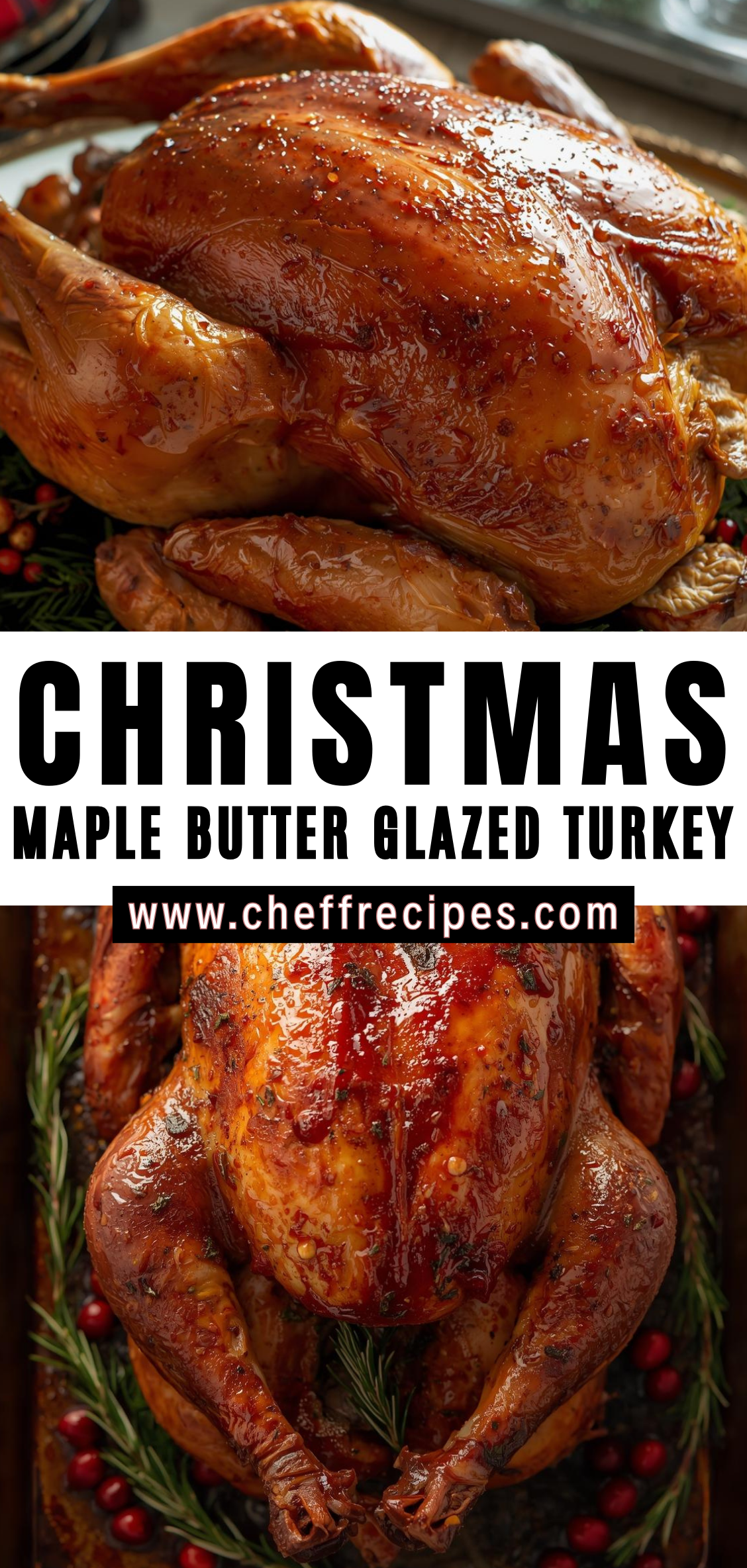
This recipe is built around balance—between sweetness and savoriness, richness and freshness, tradition and innovation. Maple syrup, with its deep amber flavor and natural caramel undertones, creates a glaze that is simultaneously rustic and elegant. When married with butter, it becomes luxurious, silky, and capable of coating the turkey in a sheen that catches the golden light of the oven. The glaze clings to the skin as it roasts, tightening and darkening into a lacquer that hints at woodsmoke, roasted nuts, and winter warmth. It whispers of quiet forests, snow-covered cabins, warm hearths, and holiday gatherings that stretch long into the evening.
But maple alone does not tell the full story. The aroma of herbs—sage, thyme, rosemary, and bay—brings the savory backbone that defines a classic roast turkey. Citrus, whether in the form of orange peel or fresh lemon juice, cuts through the richness and introduces a brightness reminiscent of winter fruit and evergreen air. Butter, softened and blended with salt, herbs, and seasonings, works its way under and over the skin, basting the bird from within as it melts. The turkey becomes tender and fragrant, its juices enriched by the slow infusion of flavors and its skin transformed into a crackling, golden shell.
The sensory experience of preparing a Christmas turkey is almost as rewarding as eating it. There is the feel of spreading softened butter beneath the cool skin, gently coaxing flavor into every corner. There is the sound of the oven as it hums to life, signaling the beginning of a long winter roast. There is the scent—warm, sweet, herbal, and unmistakably festive—that fills the kitchen and drifts into every room of the home, prompting guests to hover, peek, and ask when dinner will be ready. Cooking a turkey, especially one destined for a Christmas celebration, is its own form of ceremony. It requires patience, attention, and a kind of generosity that mirrors the season itself.
Preparing a turkey can also be daunting, even for experienced cooks. It is a large and sometimes unwieldy bird. There are questions of brining, stuffing, roasting times, resting periods, and carving. There are fears of overcooking, underseasoning, or drying out the breast meat before the legs have finished roasting. A Christmas turkey demands respect and thoughtful handling—but when done well, it rewards the cook with a centerpiece that is not merely delicious but emotionally resonant.
This maple-butter glazed version offers a path to success that is both reliable and indulgent. The butter keeps the meat moist and tender. The maple glaze ensures a stunning finish. The aromatics tucked inside the cavity add depth from within. And the roasting technique, refined through careful timing and temperature adjustments, ensures even cooking from wingtip to thigh. Whether you are hosting an intimate holiday dinner or feeding a full house of family, friends, and guests from near and far, this turkey stands ready to anchor the celebration with both grandeur and comfort.
In the pages that follow, we will explore every essential facet of this recipe. You will learn how to choose the right turkey for your gathering, how to prepare and season it with confidence, and how to roast it to succulent perfection. We will look at the science behind moisture retention, the art of glazing, and the practical tips that can transform the entire process from stressful to seamless. You will also find detailed carving instructions, serving suggestions, make-ahead strategies, and ideas for using leftovers in ways that maximize flavor and minimize waste.
A Christmas turkey should not merely be a dish; it should be an experience—one that begins in the morning with the gentle rhythm of preparation and culminates in the evening when the bird arrives at the table glistening, aromatic, and worthy of a celebration. The Christmas Maple Butter Glazed Turkey embodies that experience. It is festive, comforting, and unmistakably crafted with care.
Detailed Step-by-Step Instructions
1. Preparing the Turkey: Thawing, Cleaning, and Drying
A flawless roast begins long before the turkey reaches the oven. Preparing it properly ensures even cooking, ideal browning, and optimal flavor absorption.
-
Thaw the turkey completely.
If using a frozen bird, allow it to thaw in the refrigerator. A general guideline is 24 hours of thawing for every 4 to 5 pounds. A partially frozen turkey will cook unevenly, causing the breast to dry out before the legs finish. -
Remove neck and giblets.
Check both the main cavity and the smaller neck cavity. Set aside the giblets if you plan to use them for gravy or stock. -
Rinse only if necessary.
Many chefs avoid rinsing poultry to prevent cross-contamination. If you prefer to rinse, do so gently, then clean and sanitize the sink thoroughly afterward. -
Pat completely dry.
Use several layers of paper towels to remove moisture from the skin and cavity. Perfectly dry skin is essential for crisp browning and helps the butter cling properly. -
Trim excess fat.
Remove any loose pieces of skin or fat around the cavity opening. This improves presentation and helps air circulate during roasting.
At this stage, the turkey should be thawed, clean, and thoroughly dried—a blank canvas ready for flavor.
2. Preparing the Maple Herb Butter
The maple herb butter is the backbone of this recipe. It seasons the meat, bastes the bird from within, and carries the maple glaze deep into the turkey.
-
Soften the butter.
Leave it at room temperature until it is pliable enough to spread without tearing the skin. -
Add seasonings.
Combine the butter with salt, cracked black pepper, chopped fresh thyme, sage, rosemary, and a small amount of grated garlic. The herbs should be finely minced to ensure even distribution. -
Incorporate maple syrup.
Add a moderate amount of pure maple syrup. The goal is to enrich the butter, not thin it out. The butter should remain thick enough to spread but loose enough to melt smoothly during roasting. -
Mix thoroughly.
Use a spatula or your hands to blend the ingredients until the butter is uniform in texture and speckled evenly with herbs.
This compound butter will be applied in layers—under the skin, over the skin, and inside the cavity—to ensure complete infusion of flavor.
3. Applying the Butter Beneath the Skin
Getting butter under the skin is one of the most important steps in producing moist, flavorful turkey meat.
-
Loosen the skin gently.
Starting at the neck end, slide your fingers between the skin and breast meat. Work slowly and carefully to avoid tearing. Extend your reach toward the thighs if possible. -
Spread the butter beneath the skin.
Scoop a portion of the flavored butter and slide it beneath the loosened skin. Use your hands to smooth it evenly across the breast. An even layer will melt uniformly, basting the meat from within. -
Massage from above.
Once the butter is in place, gently press along the top of the skin to spread it further. This ensures full coverage without needing to reposition your hands beneath the skin.
Applying butter beneath the skin prevents dryness—particularly in the breast meat—and enhances richness.
4. Seasoning the Exterior and Cavity
The cavity and exterior offer additional opportunities to build aroma and depth of flavor.
-
Season the cavity generously.
Sprinkle salt and pepper into the interior. Insert aromatics such as fresh thyme sprigs, rosemary, halved onions, garlic bulbs cut horizontally, and quartered oranges. These ingredients slowly steam inside the turkey, subtly perfuming the meat. -
Tie the legs.
Truss the turkey by crossing the legs and tying them with kitchen twine. This helps the bird roast evenly and maintain its shape. -
Tuck the wing tips.
Fold them underneath the body to prevent burning and to create a more compact roasting shape. -
Coat the skin with remaining butter.
Spread the remaining maple herb butter generously across the entire surface of the turkey. Ensure that every visible area is covered.
This final butter layer develops the deep amber color and glossy finish that defines the glaze.
5. Initial High-Heat Roasting
The roasting process begins with high heat to set the skin and encourage early browning.
-
Preheat the oven to 425°F (220°C).
A hot oven jump-starts caramelization. -
Position the turkey on a roasting rack.
The rack elevates the bird, allowing hot air to circulate and promoting even browning. -
Roast uncovered for the first 30 to 45 minutes.
This stage develops the initial golden color and seals the butter beneath the skin. -
Monitor the skin closely.
If certain spots darken too quickly, rotate the pan or tent lightly with foil, ensuring not to cover the entire bird at this stage.
This first phase is not intended to cook the turkey fully; it merely establishes a strong foundation for the glaze.
6. Lowering the Oven Temperature and Beginning the Maple Glaze
Once the turkey has browned, it is time to introduce the glaze in stages.
-
Reduce the oven temperature to 325°F (165°C).
The turkey now cooks low and slow, ensuring juicy meat. -
Prepare the glaze.
Simmer maple syrup, butter, a splash of apple cider or orange juice, and a touch of Dijon mustard until slightly thickened. The glaze should coat the back of a spoon. -
Brush the turkey lightly for the first glaze application.
Use a pastry brush to apply a thin, even coat. Avoid drenching the skin; early applications should be restrained to prevent burning before the turkey is fully cooked. -
Return the turkey to the oven.
Continue roasting, basting every 30 to 40 minutes.
The glaze gradually builds color, depth, and shine as the turkey cooks.
7. Monitoring Internal Temperature
Perfect turkey is determined by temperature, not time.
-
Insert a meat thermometer into the thickest part of the thigh.
Avoid touching bone, which gives inaccurate readings. -
Roast until the thigh reaches 170°F (77°C) and the breast reaches 160°F (71°C).
Residual heat will bring the temperature up slightly during resting. -
Continue glazing during this phase.
Each layer of glaze deepens the sheen and develops a complex caramelized finish. -
Tent lightly with foil if browning too quickly.
Protecting the skin at this stage ensures optimal color without bitterness.
Temperature vigilance is key to achieving both moist breast meat and fully cooked legs.
8. Final Glazing and Resting
When the turkey reaches ideal internal temperature, it is time for the final transformation.
-
Remove the turkey from the oven and apply a final coat of glaze.
This coat goes on while the bird is hot, giving it a lacquered, mirror-like shine. -
Rest for at least 30 to 45 minutes.
Resting allows juices to redistribute. Cutting too early will cause moisture loss. -
Transfer carefully to a carving board.
The rested turkey should be stable yet still warm, with juices contained within the meat.
Resting is not optional; it is essential for tenderness.
9. Carving and Presenting
This final stage determines how beautifully the turkey is served.
-
Remove the legs first.
Separate the thigh and drumstick, cutting through the natural joint. -
Slice the breast.
Slice against the grain into even, smooth portions. -
Arrange on a platter.
Drizzle lightly with warmed maple glaze or pan drippings to highlight the sheen. -
Garnish with citrus slices and fresh herbs.
This adds fragrance and visual appeal.
A well-carved turkey showcases both craftsmanship and hospitality.
Christmas Maple Butter Glazed Turkey
Christmas has a way of gathering people around the table with a particular kind of anticipation. It is a holiday steeped in tradition, guided by memory, and defined by the aromas that drift from the kitchen long before the meal is served.
Ingredients
- For the Turkey:
- 1 whole turkey (12–14 lbs), thawed if frozen
- Salt and black pepper
- 1 onion, quartered
- 1 lemon, halved
- 1 head garlic, halved horizontally
- 4–6 sprigs fresh rosemary
- 4–6 sprigs fresh thyme
- 2–3 sprigs fresh sage
- 1 cup chicken broth or turkey stock (for roasting pan)
- Maple Butter Glaze:
- ½ cup unsalted butter, softened
- ⅓ cup pure maple syrup
- 1 tbsp Dijon mustard
- 1 tsp smoked paprika
- 1 tsp garlic powder
- 1 tsp onion powder
- ½ tsp ground cinnamon (optional but delicious for Christmas flavor)
- 1 tsp salt
- ½ tsp black pepper
Instructions
1. Prepare the Turkey
- Preheat your oven to 325°F (165°C).
- Remove the giblets and pat the turkey dry with paper towels.
- Season the cavity with salt and pepper.
- Stuff the cavity with onion, lemon, garlic, rosemary, thyme, and sage.
2. Make the Maple Butter Glaze
- In a small bowl, combine the softened butter, maple syrup, Dijon mustard, smoked paprika, garlic powder, onion powder, cinnamon (if using), salt, and pepper.
- Mix until smooth and creamy.
3. Coat the Turkey
- Gently loosen the skin over the turkey breasts with your hand.
- Spread ⅓ of the maple butter underneath the skin.
- Spread the remaining glaze all over the outside of the turkey.
- Place the turkey on a rack in a roasting pan and pour 1 cup broth into the bottom.
4. Roast the Turkey
- Roast the turkey uncovered for 2 hours, basting every 30 minutes with pan juices.
- After 2 hours, tent the turkey loosely with foil to prevent over-browning.
- Continue roasting for 1–1½ hours, or until the thickest part of the thigh reaches 165°F (74°C).
5. Rest and Serve
- Remove turkey from the oven and transfer to a cutting board.
- Let rest for 20–30 minutes before carving.
- Serve with extra warm pan drippings or reduced glaze.
Notes
- Optional dry brine: Rub turkey with 2–3 tbsp salt and leave uncovered in the fridge overnight for juicier meat.
- For extra glaze: Simmer ¼ cup maple syrup + 2 tbsp butter + 1 tsp mustard until thick and brush on during the last 15 minutes.
- Check early: Turkey sizes and ovens vary—start checking temperature 45 minutes before expected completion.
- Use drippings for gravy: Strain pan juices and thicken with flour or cornstarch for a rich holiday gravy.