Classic Beef Stew Recipe: Hearty, Homemade Comfort in Every Spoonful
Beef stew is one of those timeless recipes that has endured through generations, across cultures, and in countless kitchens — from rustic cottages in the countryside to modern city apartments. Its enduring popularity lies in its deep flavors, comforting warmth, and humble origins. At its core, classic beef stew is a celebration of patience and simplicity — a dish where inexpensive cuts of meat and everyday vegetables are transformed, through slow cooking, into something rich, tender, and profoundly satisfying.
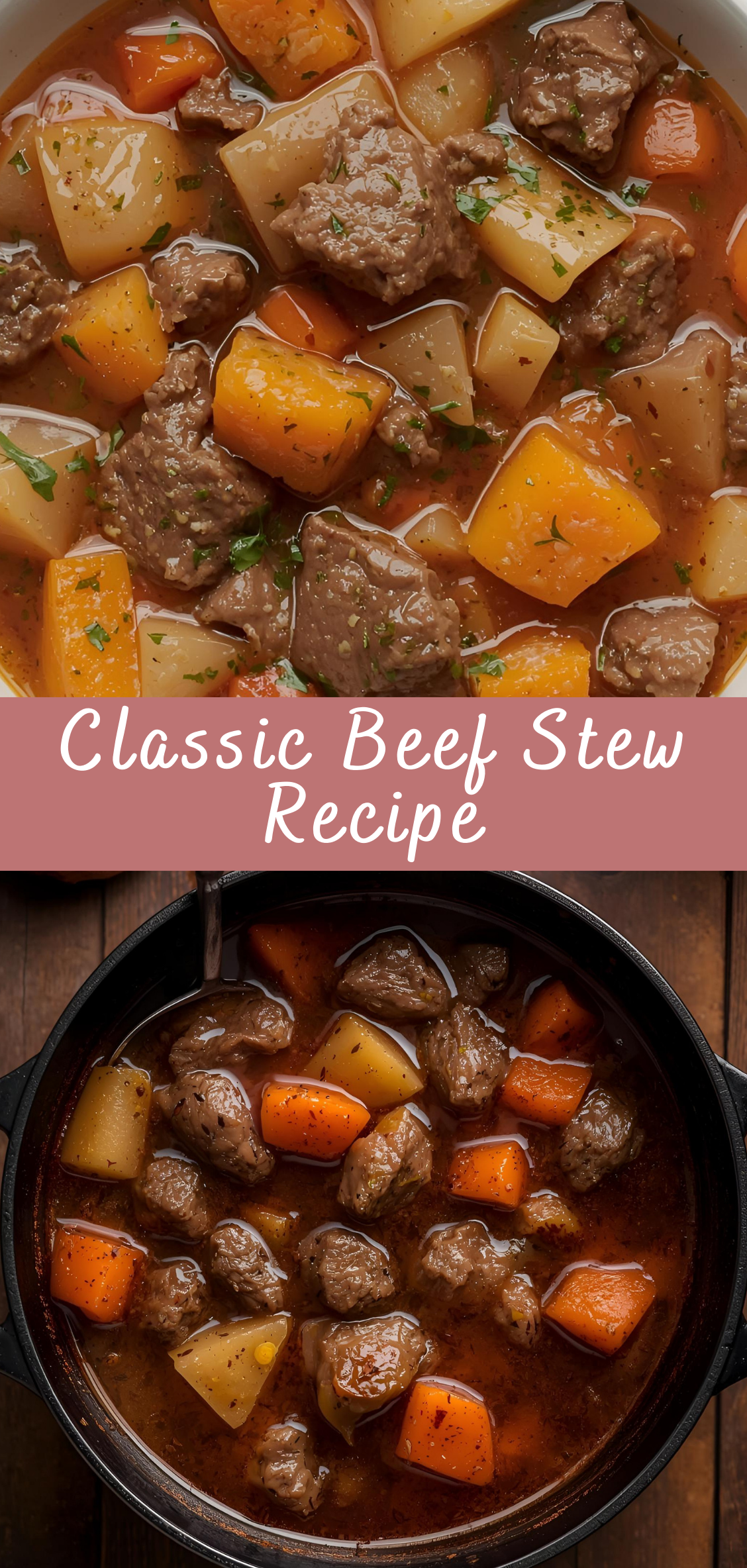
This is more than just a recipe. It’s a ritual — a culinary act of care. Whether it’s simmering on a Sunday afternoon or bubbling away in a slow cooker on a chilly weeknight, beef stew brings people together. It fills the house with the kind of aroma that tells you something good is happening in the kitchen. It nourishes not just the body, but the soul.
The version of beef stew you’ll find in this guide stays true to the traditional structure: well-browned beef, hearty root vegetables like carrots and potatoes, aromatic herbs, and a thickened broth that turns into a luscious gravy. What elevates it beyond the basics is attention to technique — searing the meat correctly, building flavor in layers, selecting the right cuts, and allowing the stew time to develop its full depth.
In this comprehensive guide, we’ll walk you through every step of crafting the perfect classic beef stew. We’ll begin with the history of the dish and its cultural significance, then explore ingredient selection in detail — from choosing the ideal beef cut to understanding how different vegetables and liquids affect the stew’s texture and flavor.
From there, we’ll move into technique: how to properly brown meat for maximum flavor, the best way to deglaze your pot, when and how to add your vegetables, and how to achieve that perfect stew consistency — thick, glossy, and cling-to-the-spoon worthy. You’ll also learn tips for avoiding common pitfalls like overcooked vegetables, underseasoned broth, or tough meat.
In addition, we’ll provide variations for dietary needs and regional tastes, ideas for slow cooker and Instant Pot adaptations, and storage tips for freezing or reheating without sacrificing quality. Finally, you’ll find serving suggestions, side dish pairings, and even beverage recommendations to round out your meal.
By the end of this article, you won’t just have a bowl of stew. You’ll have a full understanding of the time-honored techniques that make a stew go from good to unforgettable — a recipe you can return to, season after season, year after year.
Let’s begin.
Step-by-Step Instructions for the Perfect Classic Beef Stew
Step 1: Gather and Prep All Ingredients (Mise en Place)
Before the cooking begins, it’s crucial to organize everything in advance. Stew is all about slow layering and development of flavor, so a clean and orderly workspace will help you stay focused and avoid overcooking or skipping steps.
Ingredients You Will Need:
-
2.5 to 3 lbs chuck roast or stewing beef, cut into 1½-inch cubes
-
3 tablespoons all-purpose flour
-
Salt and freshly ground black pepper
-
3 tablespoons vegetable oil or olive oil
-
1 large yellow onion, diced
-
3–4 garlic cloves, minced
-
2 tablespoons tomato paste
-
4 cups beef broth (low sodium)
-
1 tablespoon Worcestershire sauce
-
2 teaspoons sugar (balances acidity)
-
2 bay leaves
-
1 teaspoon dried thyme or 3–4 sprigs of fresh thyme
-
4 large carrots, peeled and cut into thick rounds
-
3 large Yukon gold or red potatoes, cut into chunks
-
2 stalks celery, chopped
-
1 cup peas (added at the end)
-
Fresh parsley, chopped (for garnish)
Tip: Cut your vegetables into large, uniform chunks so they hold up during the long cooking process.
Step 2: Brown the Beef (The Flavor Foundation)
Proper browning of the meat is perhaps the most critical step in this entire process. This stage builds the stew’s base flavor through the Maillard reaction, the chemical process that creates those rich, savory notes when meat is browned.
Instructions:
-
Pat the beef dry with paper towels. This helps the surface sear instead of steam.
-
Season the beef generously with salt, pepper, and a light dusting of flour. The flour will help create a crust and also contribute to thickening the stew later.
-
Heat 2 tablespoons of oil in a large, heavy-bottomed Dutch oven or stew pot over medium-high heat.
-
Working in batches, sear the beef cubes on all sides until deep brown, about 3–4 minutes per side. Do not crowd the pan — overcrowding will cause the meat to steam and turn gray.
-
Transfer browned meat to a bowl or plate and set aside. Add more oil between batches if necessary.
Troubleshooting: If your pot develops dark bits that start to burn, lower the heat and splash in a few tablespoons of water or broth to deglaze as you go — these browned bits (called “fond”) are flavor gold.
Step 3: Sauté Aromatics and Build the Base
With the beef out of the pot, now is the time to extract maximum flavor from your onions, garlic, and tomato paste.
Instructions:
-
Reduce the heat to medium. Add another tablespoon of oil if needed.
-
Add the diced onions to the pot. Sauté for 5–7 minutes, stirring frequently, until they’re soft, translucent, and beginning to caramelize.
-
Add the minced garlic and stir for 30–60 seconds, just until fragrant. Don’t let it burn.
-
Stir in the tomato paste, cooking it for 1–2 minutes. This step intensifies its flavor and removes the raw taste.
Flavor Tip: Cooking the tomato paste before adding liquids allows the natural sugars to caramelize, enriching the stew’s base.
Step 4: Deglaze the Pot and Add Liquid
Deglazing helps you lift up all those flavorful browned bits stuck to the bottom of the pan — this is essential for a deep, developed flavor.
Instructions:
-
Use broth, scraping up all the brown bits using a wooden spoon.
-
Bring the wine to a simmer and let it reduce for 5–7 minutes, concentrating the flavor and cooking off the alcohol.
-
Add the beef broth, Worcestershire sauce, and sugar, stirring to combine.
-
Return the browned beef (and any juices) back to the pot.
-
Add bay leaves and thyme, then bring the mixture to a gentle simmer.
Optional Layer: For extra umami, add a teaspoon of soy sauce or a dash of anchovy paste during this stage. It won’t taste fishy — it will deepen the savory profile.
Step 5: Simmer Low and Slow
Now begins the slow-cooking magic that transforms tough meat into tender bites. This part should not be rushed.
Instructions:
-
Cover the pot with a tight-fitting lid and reduce the heat to low.
-
Let the stew simmer gently for 1½ to 2 hours, stirring occasionally to prevent sticking.
-
After the first hour, check the liquid level. Add a bit more broth or water if it’s getting too thick.
-
Taste and adjust seasoning as it develops — but wait until later for a final salt adjustment.
Slow Cooker Option: After browning the meat and sautéing the aromatics, you can transfer everything to a slow cooker. Cook on low for 8 hours or high for 4–5 hours.
Step 6: Add Vegetables and Continue Cooking
Vegetables are added later in the cooking process so they don’t become mushy. This ensures they retain their shape and a bit of bite.
Instructions:
-
Add the carrots, potatoes, and celery to the stew after about 1½ hours of simmering.
-
Stir gently to distribute the vegetables evenly.
-
Continue cooking uncovered for another 30–40 minutes, or until both the meat and vegetables are fork-tender.
-
If the stew seems too watery at this stage, simmer uncovered to allow it to reduce. For a thicker gravy, you can mash a few potato chunks and stir them in.
Texture Tip: Yukon gold or red potatoes are ideal because they hold their shape well. Russets tend to fall apart, which can work if you prefer a thicker, rustic stew.
Step 7: Finish the Stew
The final stage is all about balance. You want to round out flavors, adjust thickness, and add any final components that are best left for the end.
Instructions:
-
Stir in the frozen peas during the last 5 minutes of cooking. They’ll cook through quickly and maintain their color and sweetness.
-
Taste the stew and adjust salt, pepper, or acidity as needed. A splash of vinegar or a squeeze of lemon can brighten up heavy flavors.
-
Discard the bay leaves and thyme stems (if using fresh).
-
For extra richness, stir in a pat of butter just before serving.
Flavor Booster: A small amount of balsamic vinegar or Dijon mustard at the very end can add subtle complexity.
Step 8: Serve and Garnish
Serve the stew piping hot in deep bowls with your favorite side — crusty bread, mashed potatoes, buttered noodles, or a simple green salad.
To Garnish:
-
Sprinkle with fresh parsley for color and a touch of brightness.
-
Top with a bit of cracked black pepper or a light drizzle of olive oil for a rustic finish.
Classic Beef Stew Recipe
Beef stew is one of those timeless recipes that has endured through generations, across cultures, and in countless kitchens — from rustic cottages in the countryside to modern city apartments. Its enduring popularity lies in its deep flavors, comforting warmth, and humble origins. At its core, classic beef stew is a celebration of patience and simplicity — a dish where inexpensive cuts of meat and everyday vegetables are transformed, through slow cooking, into something rich, tender, and profoundly satisfying.
Ingredients
- For the Stew:
- 2½ lbs (1.1 kg) beef chuck, cut into 1½-inch cubes
- Salt and black pepper, to taste
- 3 tbsp all-purpose flour (optional, for dredging)
- 3 tbsp vegetable oil (or use divided oil and butter)
- 1 large yellow onion, chopped
- 3 cloves garlic, minced
- 3 tbsp tomato paste
- 4 cups beef broth (low-sodium preferred)
- 1 tbsp Worcestershire sauce
- 1 tsp dried thyme
- 1 tsp dried rosemary
- 2 bay leaves
- 4 large carrots, peeled and cut into chunks
- 3–4 medium potatoes (Yukon Gold or Russet), peeled and cubed
- 2 stalks celery, chopped
- 1 cup frozen peas (added at end)
- Fresh parsley, chopped (for garnish)
Instructions
1. Prep and Brown the Beef:
- Pat beef dry with paper towels. Season generously with salt and pepper.
- (Optional) Dredge beef lightly in flour for a thicker stew.
- Heat 2 tbsp oil in a large Dutch oven or heavy-bottomed pot over medium-high heat.
- Brown the beef in batches (don’t overcrowd). Remove and set aside.
2. Sauté Aromatics:
- Add 1 tbsp oil if needed.
- Sauté onions for 5–6 minutes until softened.
- Add garlic and cook 1 minute more.
- Stir in tomato paste and cook for another minute to caramelize slightly.
3. Deglaze and Simmer:
- Scraping up brown bits. Let it reduce slightly (2–3 min).
- Add beef broth, Worcestershire sauce, thyme, rosemary, and bay leaves.
- Return beef to the pot and bring to a simmer.
4. Cook Low and Slow:
- Reduce heat to low, cover, and simmer for 1½ hours, stirring occasionally.
- After 1½ hours, add carrots, potatoes, and celery.
- Continue cooking uncovered for another 45–60 minutes, until beef and vegetables are tender.
5. Finish the Stew:
- Discard bay leaves.
- Stir in frozen peas and cook 5 more minutes.
- Taste and adjust seasoning with salt and pepper.
6. Serve:
- Garnish with chopped parsley.
- Serve hot with crusty bread or over mashed potatoes.
Notes
- Thicker Stew: Dredging beef in flour or letting the stew simmer uncovered longer will thicken the sauce.
- Slow Cooker Method: After browning beef and sautéing onions/garlic, transfer everything to a slow cooker. Cook on low for 8 hours or high for 4–5 hours.
- Oven Method: After step 3, cover and transfer to a 325°F (160°C) oven for 2½ to 3 hours.