Chicken Enchiladas with Homemade Enchilada Sauce are one of the quintessential expressions of Mexican and Mexican-American comfort food. They combine tender, flavorful chicken, soft corn or flour tortillas, and a richly spiced sauce, resulting in a dish that is both satisfying and versatile. While enchiladas are now widely available in restaurants across North America, their traditional preparation and the inclusion of a homemade sauce elevate the dish, transforming it from a simple casserole to a celebration of flavor, technique, and cultural heritage.
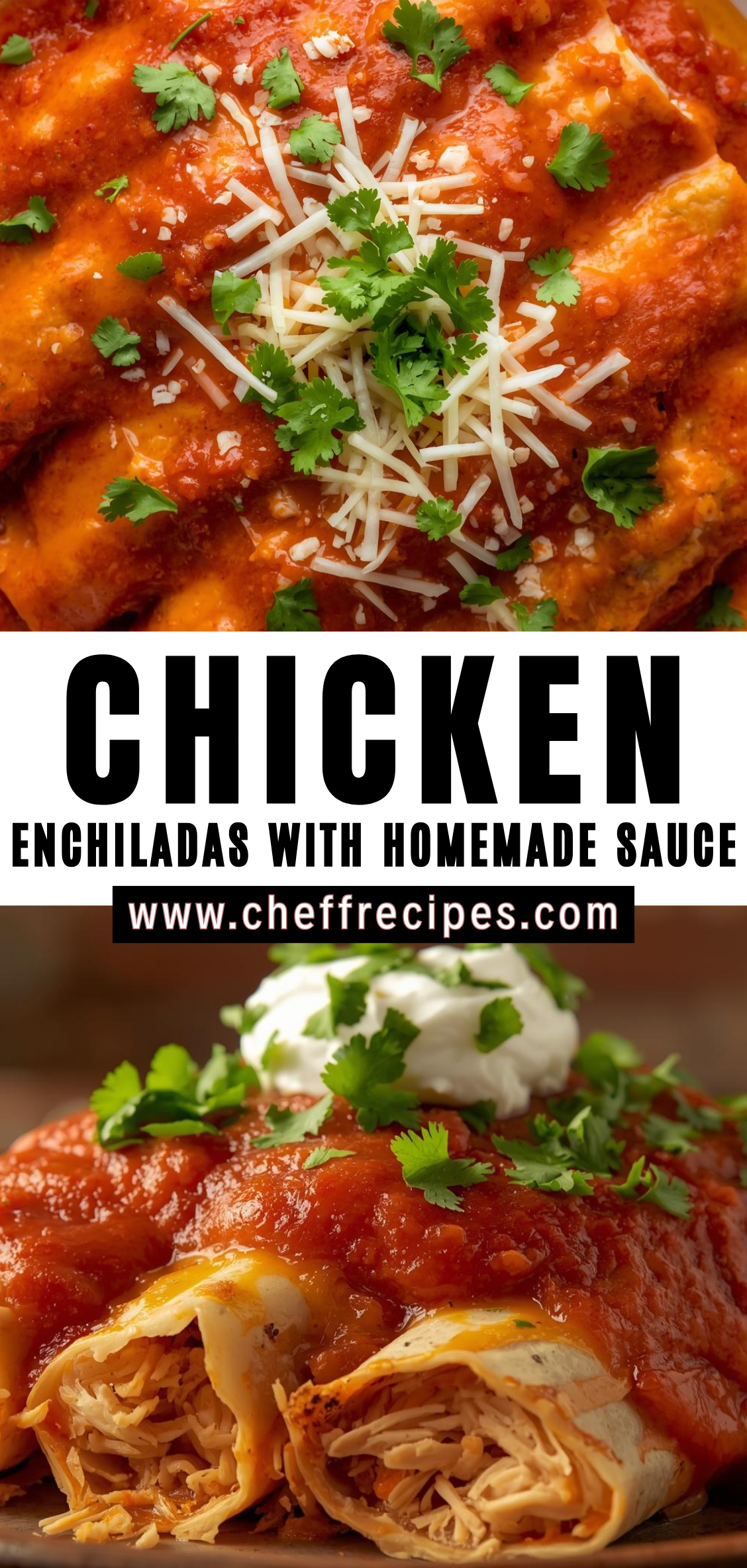
Enchiladas trace their roots to pre-Columbian Mexico, where tortillas were often filled with various ingredients and drenched in chili-based sauces. The dish evolved over centuries as indigenous ingredients and techniques merged with Spanish culinary influences. Today, enchiladas exist in countless regional variations, each reflecting local ingredients, cultural preferences, and historical context. Chicken has emerged as one of the most popular fillings due to its adaptability, mild flavor, and ability to absorb the complexity of sauces and seasonings.
The hallmark of any great enchilada is the sauce. Homemade enchilada sauce, whether red, green, or a rich mole variant, provides a depth of flavor that is difficult to replicate with store-bought alternatives. A well-crafted sauce balances heat, acidity, and richness, enveloping the chicken and tortillas in a harmonious coating that elevates every bite. The process of making the sauce from scratch—roasting or toasting dried chilies, simmering aromatic vegetables, and blending ingredients to achieve a smooth, vibrant consistency—is a key component of the dish’s authenticity and satisfaction.
Beyond flavor, Chicken Enchiladas with Homemade Enchilada Sauce are celebrated for their versatility. The dish can be adapted to suit individual tastes, dietary requirements, or seasonal ingredients. The chicken can be poached, roasted, or shredded from leftover poultry. Tortillas can be corn or flour, depending on regional preference or personal choice. Cheese, herbs, and additional fillings such as beans or sautéed vegetables offer further layers of flavor and texture. This flexibility has helped enchiladas maintain their popularity in both home kitchens and professional settings.
The dish also holds a significant cultural and social role. Enchiladas are often served at family gatherings, holiday celebrations, and community events. Preparing enchiladas can be a communal activity, with multiple cooks assembling, rolling, and layering tortillas in a large dish, fostering a sense of connection and shared culinary heritage. This combination of practical preparation, rich flavor, and cultural resonance has cemented Chicken Enchiladas as a beloved staple in Mexican and Mexican-American cuisine.
In this recipe, the goal is to provide not only a guide to preparing tender chicken and perfectly rolled tortillas but also a thorough approach to creating a balanced, deeply flavorful homemade enchilada sauce. By focusing on each element—from the choice of chilies to the blending technique, seasoning, and baking—the dish achieves a depth and authenticity that transforms a simple casserole into a memorable meal. It is a dish that embodies the spirit of Mexican cooking: bold, flavorful, adaptable, and made to be shared.
Whether you are a novice cook exploring Mexican cuisine for the first time, a seasoned home chef seeking to refine your technique, or someone in search of a reliable recipe for weeknight dinners or festive occasions, Chicken Enchiladas with Homemade Enchilada Sauce offer a satisfying, rewarding, and deeply flavorful experience. The following sections will explore the historical roots, ingredient selection, culinary techniques, and step-by-step preparation needed to create this classic dish, ensuring both authenticity and approachability.
Historical and Cultural Background
Enchiladas are one of the oldest and most emblematic dishes in Mexican cuisine. Their history stretches back to pre-Columbian times, long before the arrival of European influences, when indigenous peoples in Mesoamerica regularly prepared corn tortillas filled with locally available ingredients. Corn, or maize, was the foundation of the diet, providing both sustenance and versatility. Tortillas were often filled with beans, squash, chilies, and other vegetables, then rolled or folded to create a convenient, portable meal. Early versions of enchiladas were simple yet flavorful, typically topped with chili sauces made from roasted or dried native chilies mixed with water, herbs, and spices.
With the arrival of the Spanish in the sixteenth century came the introduction of new ingredients such as rice, garlic, onions, and domesticated animals, including chickens, pigs, and cows. These additions profoundly transformed Mexican cuisine, including enchiladas. Chicken, in particular, became a favored filling because of its availability, mild flavor, and compatibility with chili-based sauces. The combination of corn tortillas, chili sauce, and chicken laid the groundwork for what would later evolve into modern chicken enchiladas.
The word “enchilada” itself is derived from the Spanish verb enchilar, meaning “to season with chili.” This highlights the centrality of chili peppers in the dish, which were valued not only for heat but for their aromatic and flavor-enhancing qualities. Historically, enchiladas were considered a versatile meal that could accommodate a variety of fillings depending on seasonal availability and local resources. Corn tortillas remained the traditional base, though wheat flour tortillas became increasingly common in northern Mexico and in Mexican-American communities in the United States.
Enchiladas crossed into the United States primarily through migration and the influence of border states such as Texas, California, and Arizona. Mexican immigrants brought their culinary traditions, adapting them to the ingredients and kitchen equipment available in their new environment. Over time, enchiladas in the U.S. incorporated new cheeses, baking techniques, and flavor profiles, leading to regional variations that diverged from traditional Mexican preparations while retaining the essence of the dish: tortillas, filling, and chili-based sauce.
The sauce, particularly, became a defining element of the dish in both Mexico and the United States. Traditional red enchilada sauce is made from dried red chilies—such as guajillo, ancho, or pasilla—rehydrated, blended, and simmered with onions, garlic, and spices. This process allows the sauce to achieve a complex depth of flavor, balancing heat, acidity, and subtle sweetness. In Mexican-American adaptations, the sauce often incorporated additional ingredients like tomato paste, chicken broth, and various seasonings to create a smoother, richer, and more approachable sauce for home cooks.
Chicken enchiladas themselves became a staple in Tex-Mex cuisine, a fusion style that blends Mexican culinary techniques with American preferences for cheese, creamy textures, and baking. This version of enchiladas emphasizes both flavor and practicality: chicken is cooked, shredded, and mixed with cheese or other ingredients, then rolled in tortillas, smothered in sauce, topped with cheese, and baked until bubbly and golden. The baking process not only melds flavors but also ensures the dish is moist, flavorful, and visually appealing—a key factor in its popularity at family gatherings, potlucks, and restaurant tables alike.
Today, Chicken Enchiladas with Homemade Enchilada Sauce represent a bridge between tradition and adaptation. They honor the historical roots of enchiladas while embracing contemporary techniques that simplify preparation without sacrificing flavor. Using a homemade sauce allows cooks to control the level of spice, richness, and texture, ensuring a personalized dish that maintains authenticity while catering to modern tastes. The combination of tender chicken, flavorful sauce, and soft tortillas makes enchiladas both a comforting everyday meal and a dish worthy of special occasions.
The cultural significance of enchiladas extends beyond the kitchen. They are central to communal dining, festive gatherings, and family traditions. Preparing enchiladas often involves multiple steps and collaboration—cooking the chicken, blending and simmering the sauce, rolling the tortillas—which fosters a sense of connection and shared culinary heritage. Whether served in homes in Mexico, in Mexican-American communities across the United States, or at restaurants worldwide, enchiladas embody warmth, flavor, and tradition.
Enchiladas with Homemade Enchilada Sauce
Chicken Enchiladas with Homemade Enchilada Sauce are one of the quintessential expressions of Mexican and Mexican-American comfort food. They combine tender, flavorful chicken, soft corn or flour tortillas, and a richly spiced sauce, resulting in a dish that is both satisfying and versatile. While enchiladas are now widely available in restaurants across North America, their traditional preparation and the inclusion of a homemade sauce elevate the dish, transforming it from a simple casserole to a celebration of flavor, technique, and cultural heritage.
Ingredients
- For the Chicken Filling
- 2 cups cooked, shredded chicken (rotisserie or poached)
- 1 cup shredded Mexican blend cheese (cheddar, Monterey Jack)
- ½ cup diced onion
- 1 tsp ground cumin
- ½ tsp chili powder
- Salt & pepper to taste
- For the Homemade Red Enchilada Sauce
- 2 Tbsp vegetable oil
- 2 Tbsp all-purpose flour
- 3 Tbsp chili powder
- 1 tsp ground cumin
- ½ tsp garlic powder
- ¼ tsp smoked paprika (optional)
- 2 cups chicken broth
- 1 (8 oz) can tomato sauc
- Salt to taste
- For Assembly
- 8–10 corn or flour tortillas (6-inch)
- 1½ cups shredded cheese (Mexican blend or mozzarella)
- Chopped fresh cilantro (optional)
- Sliced avocado, sour cream, or lime wedges for serving
Instructions
1. Make the Enchilada Sauce
- Heat oil in a medium saucepan over medium heat.
- Whisk in flour and cook 1 minute to make a roux.
- Add chili powder, cumin, garlic powder, smoked paprika; cook 30 seconds to bloom spices.
- Slowly whisk in chicken broth and tomato sauce until smooth.
- Simmer for 8–10 minutes, stirring occasionally, until slightly thickened.
- Season with salt to taste.
2. Prepare the Filling
- In a bowl, combine shredded chicken, 1 cup cheese, diced onion, cumin, chili powder, salt, and pepper.
- Mix until evenly combined.
3. Assemble the Enchiladas
- Preheat oven to 375°F (190°C).
- Lightly grease a 9×13 baking dish.
- Warm tortillas slightly to make them pliable (microwave 20–30 seconds or on a skillet).
- Spoon 2–3 Tbsp chicken filling onto each tortilla, roll tightly, and place seam-side down in the dish.
- Pour enchilada sauce evenly over the rolled tortillas.
- Sprinkle remaining ½–1 cup cheese on top.
4. Bake
- Cover with foil and bake 20 minutes.
- Remove foil and bake an additional 5–10 minutes until cheese is melted and bubbly.
5. Serve
Garnish with cilantro, avocado slices, sour cream, or a squeeze of lime.
Notes
- Sauce tips: Homemade enchilada sauce can be made ahead and stored in the fridge up to 5 days.
- Chicken shortcut: Rotisserie chicken or leftover roasted chicken works perfectly.
- Make ahead: Assemble in the dish, cover tightly, and refrigerate up to 24 hours; bake an extra 5–10 minutes.
- Spice adjustments: Add cayenne or chipotle powder to the sauce for extra heat.
- Tortilla tips: Slightly frying or warming corn tortillas prevents them from cracking while rolling.
- Freezer-friendly: Assemble and freeze before baking; thaw in the fridge overnight and bake as directed.