Loaded baked potato casserole is one of those rare comfort food dishes that manages to be nostalgic, indulgent, practical, and endlessly customizable all at once. Drawing inspiration from the classic loaded baked potato—complete with crispy-skinned potatoes, melted cheese, smoky bacon, sour cream, and chives—this casserole transforms all of those beloved elements into a warm, bubbling, cohesive dish that feeds a crowd without sacrificing flavor. It is the kind of recipe people turn to for potlucks, family gatherings, holidays, weeknight dinners, and any moment that calls for hearty, satisfying food that feels both familiar and special.
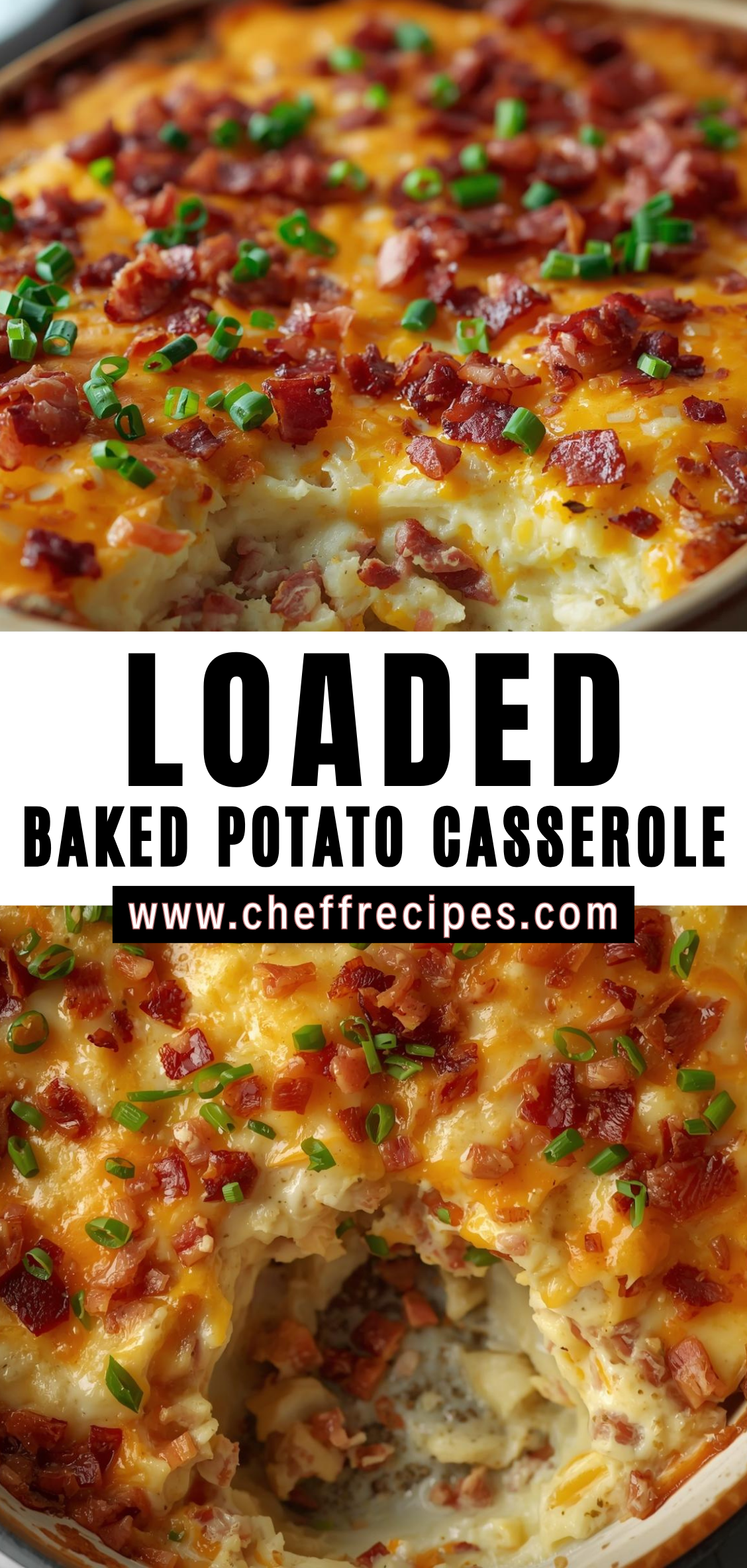
What makes this casserole particularly appealing is its marriage of flavors and textures. The creamy base of mashed or cubed potatoes melds with rich cheddar cheese and savory bacon, while additions like sour cream, butter, and green onions bring brightness and depth. The top layer develops a lightly golden crust in the oven, giving way to a velvety interior that is comforting without being monotonous. Each bite delivers a balance of salty, creamy, tangy, and subtly sweet notes—the same qualities that have made loaded baked potatoes a perennial favorite for generations.
At its core, loaded baked potato casserole is an exercise in elevating simplicity. Potatoes, one of the most versatile ingredients in the culinary world, serve as a blank canvas. Their mild flavor and natural creaminess allow them to absorb and harmonize the bold components typically found in the “loaded” style of preparation: cheese, bacon, scallions, and rich dairy. When baked into a casserole, these ingredients do more than simply coexist—they merge into something that feels like a complete meal, hearty enough to satisfy on its own but flexible enough to complement a wide variety of main dishes.
Another reason this recipe resonates with so many home cooks is its adaptability. It can be adjusted to fit budget, dietary needs, available ingredients, and personal taste preferences. Want a slightly lighter version? Replace some of the sour cream with Greek yogurt. Prefer a more decadent dish? Add cream cheese or extra butter. Feeding a crowd with dietary restrictions? Omit the bacon, swap the cheese, add vegetables, or experiment with herbs and spices. The casserole’s structure makes it incredibly forgiving, allowing cooks to adjust flavors without worrying about ruining the dish.
The casserole format also offers significant practical advantages. Unlike individual baked potatoes that must be cooked, assembled, and served immediately, this dish can be prepared ahead of time, refrigerated, and baked when needed. It travels well, reheats beautifully, and maintains its satisfying texture even after sitting out on a buffet table. For busy households, this flexibility is invaluable. It’s the kind of dish you can assemble on a quiet evening, refrigerate overnight, and bake the following day to serve during a busy weeknight or gather friends for a casual dinner.
More than anything, loaded baked potato casserole embodies the essence of comfort cooking: generous, approachable, and prepared with ingredients that evoke warmth and togetherness. It is a dish that invites sharing, conversation, and the simple pleasure of a hot, homemade meal. Whether you are preparing it for a holiday feast, a game-day spread, or a cozy night in, this casserole brings with it a sense of tradition and culinary joy.
Detailed Instructions
Creating a loaded baked potato casserole that is creamy, flavorful, and perfectly textured requires attention to preparation, layering, and timing. Every step—from selecting the right potatoes to assembling the casserole and finishing it in the oven—affects the final balance of creaminess, crispness, and flavor. Below is a comprehensive guide that walks you through each stage of preparation.
1. Select and Prepare the Potatoes
The choice of potato is crucial. Russet potatoes are ideal because of their high starch content, which results in a fluffy, creamy interior. Yukon Gold potatoes can also be used for a slightly buttery flavor and creamier texture.
Preparation Steps:
-
Wash and scrub the potatoes thoroughly to remove dirt and debris.
-
Peel the potatoes if you prefer a smoother casserole, or leave the skins on for a rustic, hearty texture.
-
Cut the potatoes into evenly sized cubes (about 1–1½ inches) to ensure even cooking. Uneven pieces can lead to some pieces being undercooked while others overcook.
2. Cook the Potatoes
Potatoes can be cooked in two primary ways depending on the texture you desire: boiling or roasting.
Boiling Method:
-
Place the potato cubes in a large pot and cover them with cold water.
-
Add a pinch of salt to season the potatoes from the start.
-
Bring the water to a boil over medium-high heat, then reduce to a simmer.
-
Cook for 10–15 minutes or until the potatoes are fork-tender but not falling apart. Overcooked potatoes can become mushy when mixed into the casserole.
-
Drain the potatoes thoroughly and return them to the pot or a large mixing bowl.
Roasting Method (for added flavor):
-
Toss the potato cubes in a small amount of oil, salt, and pepper.
-
Spread them evenly on a baking sheet.
-
Roast at 400°F (200°C) for 20–25 minutes, flipping halfway through, until golden and tender.
-
Allow to cool slightly before combining with other ingredients.
3. Prepare the Cheese and Bacon
Cheese and bacon are critical for flavor and texture.
Cheese:
-
Shred your choice of cheese. Cheddar is traditional, but a combination of cheddar and Monterey Jack or smoked gouda adds complexity.
-
Shred the cheese just before using to ensure it melts evenly and retains freshness.
Bacon:
-
Fry or bake bacon until crisp. Baking on a wire rack over a sheet pan is ideal for even cooking and reduced grease.
-
Once cooked, place bacon on paper towels to remove excess fat, then crumble or chop into bite-sized pieces.
-
Save a few larger pieces for garnish if desired.
4. Make the Creamy Base
The creamy component of the casserole binds the potatoes, cheese, and bacon together. Typical ingredients include sour cream, cream cheese, milk or half-and-half, and butter.
Steps:
-
In a large mixing bowl, combine sour cream and cream cheese, ensuring the cream cheese is softened for easy blending.
-
Add milk or half-and-half gradually while whisking to achieve a smooth, pourable consistency.
-
Season with salt, pepper, garlic powder, and onion powder to taste. Optional: add smoked paprika or a small pinch of cayenne for subtle warmth.
-
Taste the mixture and adjust seasoning before combining with potatoes.
5. Combine Potatoes with Creamy Mixture
-
Gently fold the cooked potatoes into the creamy mixture. Use a spatula to avoid breaking the cubes apart.
-
Add the majority of the shredded cheese and crumbled bacon, reserving some for the topping.
-
Mix carefully until all ingredients are evenly incorporated. The goal is a cohesive mixture without over-mashing the potatoes.
6. Prepare the Baking Dish
-
Grease a 9×13-inch or similarly sized casserole dish with butter or nonstick spray.
-
For extra flavor, sprinkle a thin layer of shredded cheese or breadcrumbs on the bottom before adding the potato mixture. This step helps prevent sticking and adds a slight crunch to the base.
7. Assemble the Casserole
-
Transfer the potato mixture into the prepared baking dish, spreading it evenly.
-
Sprinkle the remaining shredded cheese and crumbled bacon evenly on top.
-
Optionally, add additional toppings such as chopped green onions, chives, or a light dusting of paprika for color and flavor.
8. Bake Until Golden and Bubbling
-
Preheat the oven to 350°F (175°C).
-
Cover the casserole loosely with aluminum foil to prevent the top from over-browning while ensuring even heating.
-
Bake for 25–30 minutes.
-
Remove the foil and bake for an additional 10–15 minutes until the top is golden, cheese is fully melted, and the casserole is bubbling along the edges.
9. Let the Casserole Rest
-
Once baked, remove the casserole from the oven and allow it to rest for 5–10 minutes.
-
Resting helps the casserole set slightly, making it easier to serve while allowing flavors to meld.
10. Serve and Garnish
-
Use a spatula to serve individual portions.
-
Garnish with additional chopped green onions, parsley, or reserved bacon pieces.
-
Serve hot as a main dish, side dish, or part of a holiday spread.
11. Optional Additions for Extra Flavor
-
Caramelized onions for sweetness
-
Roasted garlic for depth
-
Sour cream dollops on individual servings
-
A sprinkle of smoked paprika or shredded Parmesan for extra complexity
Loaded Baked Potato Casserole
Loaded baked potato casserole is one of those rare comfort food dishes that manages to be nostalgic, indulgent, practical, and endlessly customizable all at once. Drawing inspiration from the classic loaded baked potato—complete with crispy-skinned potatoes, melted cheese, smoky bacon, sour cream, and chives—this casserole transforms all of those beloved elements into a warm, bubbling, cohesive dish that feeds a crowd without sacrificing flavor. It is the kind of recipe people turn to for potlucks, family gatherings, holidays, weeknight dinners, and any moment that calls for hearty, satisfying food that feels both familiar and special.
Ingredients
- For the Casserole:
- 3 lbs russet or Yukon Gold potatoes, peeled and cut into chunks
- ½ cup sour cream
- ½ cup softened cream cheese
- ½ cup milk (or heavy cream for richness)
- 4 tbsp butter
- 1 ½ cups shredded cheddar cheese, divided
- ½ cup cooked bacon, crumbled (plus extra for topping)
- 3 green onions, thinly sliced
- 1 tsp garlic powder
- 1 tsp salt (or to taste)
- ½ tsp black pepper
- Optional: ¼ cup chopped chives
Instructions
1. Cook the potatoes
- Add potatoes to a large pot of salted water.
- Bring to a boil and cook 15–18 minutes, until fork-tender.
- Drain well.
2. Mash the base
- Return potatoes to the pot.
- Add butter, cream cheese, sour cream, milk, garlic powder, salt, and pepper.
- Mash until smooth and creamy. Adjust consistency with extra milk if needed.
3. Add the mix-ins
- Stir in 1 cup cheddar cheese, bacon, and half of the green onions.
4. Assemble
- Spoon mixture into a greased 9×13-inch baking dish.
- Top with remaining ½ cup cheddar cheese and additional bacon.
5. Bake
- Bake at 350°F (175°C) for 25–30 minutes, until hot and cheese on top is melted and bubbly.
6. Serve
- Garnish with remaining green onions and chives (if using).
- Serve warm.
Notes
- Make-ahead: Assemble up to 24 hours ahead; cover and refrigerate. Add 10–15 minutes to bake time.
- Add protein: Mix in shredded chicken, diced ham, or ground beef for a full meal.
- Cheese options: Sharp cheddar is classic, but Monterey Jack or a blend works well.
- Loaded-style toppings: Drizzle with ranch, add extra bacon, or sprinkle crispy fried onions on top.
- Lighter option: Use Greek yogurt instead of sour cream and reduce butter to 2 tbsp.