Few dishes embody the heart of Central European cooking as completely and elegantly as schnitzel. At first glance, it is a simple preparation: a thin cutlet of meat, carefully breaded and fried to a crisp golden finish. Yet behind this superficially modest description lies a dish with a remarkable depth of craft, tradition, and cultural resonance. Schnitzel is more than a meal; it is a culinary ritual that spans generations, borders, and family tables. Its preparation invites attention to detail, respect for technique, and an appreciation for the harmony that results when humble ingredients are handled with precision.
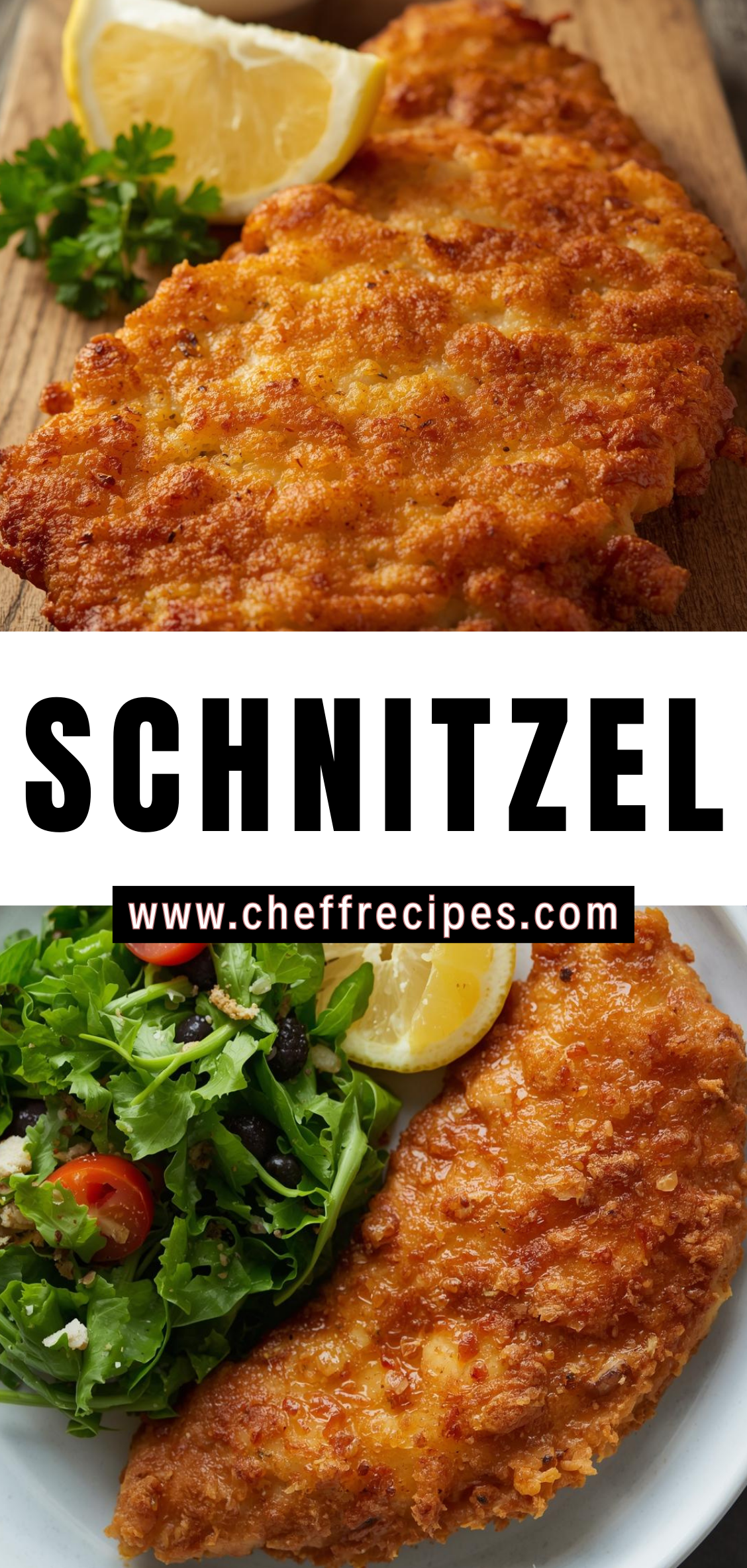
Across Austria, Germany, Hungary, the Czech Republic, Israel, and beyond, schnitzel appears in various forms, each region contributing its own distinct character. Perhaps the most famous version is Wiener Schnitzel, a protected dish under Austrian culinary law that must be made from veal. Its breadcrumb crust is characteristically delicate, almost ethereal, puffing slightly as it fries and encasing the cutlet in a crisp shell that shatters gently under the knife. German Jägerschnitzel, on the other hand, introduces a deeply flavored mushroom gravy that brings a rustic richness to the table. Israeli schnitzel, often made from chicken breast, has become a beloved staple in home kitchens, lunch counters, and street stands. Despite these variations, all forms share the same essential philosophy: transforming a simple piece of meat into something extraordinary through thoughtful technique.
The magic of schnitzel lies not in elaborate ingredients but in the mastery of a few fundamental steps. The meat must be pounded evenly, both to tenderize it and to ensure uniform cooking. Seasoning must be measured yet confident. The breading must be applied in a precise sequence—flour, egg, and breadcrumbs—each layer performing a specific function in creating the dish’s characteristically crisp exterior. And finally, the frying process must be monitored with care, balancing temperature, timing, and movement so the crust becomes golden and audibly crisp while the interior remains juicy and tender.
These steps are deceptively simple, and yet they demand attention. Rushing any stage risks losing the delicate balance that defines an exceptional schnitzel. Too much pressure during breading, and the crust won’t adhere correctly. Too little oil, and the schnitzel will absorb more fat than it releases, turning greasy rather than crisp. Too high a temperature, and the breadcrumbs will darken before the meat fully cooks. The dish teaches patience and precision, rewarding those who approach it with respect.
Schnitzel’s enduring popularity also stems from its remarkable versatility. It can be served with a squeeze of lemon and a light salad for a refreshing meal, or paired with potato salad, spaetzle, buttered potatoes, or bright lingonberry sauce. It can be dressed simply for a weekday lunch or elevated for a refined dinner. Leftovers, if you are lucky enough to have any, make exceptional sandwiches. Each version tells a story about the household or region from which it comes, reflecting personal taste as much as culinary heritage.
More than anything, schnitzel carries emotional significance. For many, it is the taste of home, of family gatherings, of childhood dinners prepared by a parent or grandparent with practiced hands. It is a dish that evokes comfort and continuity, connecting past and present through shared experience. Even for those who did not grow up with it, schnitzel possesses a universal appeal—a perfect balance of texture, richness, and simplicity that transcends cultural boundaries.
In this recipe, you will learn the foundational technique that underpins every great schnitzel, while also gaining the knowledge to adapt the dish to your preferred protein, flavor profile, and regional style. Each step will be explained in detail, including the small decisions and subtle gestures that separate a good schnitzel from an unforgettable one. By the end of the process, you will have the confidence to produce a schnitzel that is crisp, light, evenly golden, and deeply satisfying.
Step-by-Step Instructions (Extremely Detailed)
1. Prepare and Trim the Meat Properly
Great schnitzel starts long before the pan heats. The treatment of the meat determines tenderness, cooking time, and the final texture of the crust.
-
Select the cut.
Depending on the schnitzel style, choose veal (for Wiener schnitzel), chicken breast, or turkey breast. Each should be free of excess connective tissue.-
Veal: Look for top round or leg cuts, pale in color with minimal marbling.
-
Chicken/Turkey: Slice breasts horizontally to create even cutlets.
-
-
Trim carefully.
Remove silver skin, thick fat bands, or tough membranes. These toughen during frying and cause buckling. -
Portion evenly.
Cutlets should weigh roughly the same so they cook uniformly. Aim for portions around 4–6 ounces each.
Preparing the meat with precision ensures even pounding, even cooking, and a consistent schnitzel in texture and appearance.
2. Pound the Cutlets to a Uniform Thinness
This is one of the most crucial steps. Schnitzel must be thin enough to cook quickly but not so thin that the meat dries out or tears.
-
Use plastic wrap or parchment.
Place the cutlet between two sheets. This prevents sticking and protects the fibers as you pound. -
Use a meat mallet or rolling pin.
A mallet with a flat side works best. Start at the center and move outward, pounding gently but firmly. -
Aim for ⅛ to ¼ inch thickness.
The cutlet should enlarge considerably, becoming almost translucent around the edges. Uniformity is more important than exact measurement. -
Correct for uneven edges.
If the edges become too thin, fold them slightly inward. This prevents over-crisping or burning during frying.
Pounding changes the meat’s texture, making it tender while promoting the signature even fry of a traditional schnitzel.
3. Season the Cutlets Simply and Effectively
Schnitzel’s flavor comes not from heavy seasoning but from balance.
-
Use fine salt.
Season both sides lightly but evenly. Avoid coarse salt, which can puncture the surface and interfere with crust adhesion. -
Add pepper sparingly.
Traditionally, pepper is used lightly or omitted entirely in Wiener schnitzel, but German and Israeli variations allow for a bit more. -
Season at the correct time.
Season immediately before dredging. Too early, and the salt draws moisture to the surface, risking soggy breading.
This minimal seasoning supports the dish’s traditional clean flavor while ensuring the meat remains juicy.
4. Set Up the Breading Station with Precision
A proper breading setup controls texture, adhesion, and fry quality. You will need three wide, shallow dishes arranged in a line.
-
Dish 1: Flour.
Use all-purpose flour. Lightly whisk it to eliminate lumps.
Add a pinch of salt if desired, but keep it subtle. -
Dish 2: Eggs.
Beat the eggs until completely smooth. For lighter coverage, thin with a tablespoon of water or milk. -
Dish 3: Breadcrumbs.
-
Traditional: Fine, dry breadcrumbs for even browning.
-
Austrian-Style: Very fine, almost powdery crumbs that puff slightly as they fry.
-
German/Heavier Style: Slightly coarser crumbs, which give a crunchier crust.
-
Have tongs or one clean hand designated for dry ingredients and one for wet to maintain a tidy workflow.
5. Dredge the Cutlets in the Classic Three-Step Method
Each coating contributes something distinct to the final result. The goal is to create a crust that is crisp and cohesive but not thick or heavy.
-
Step 1: Flour.
Coat lightly, shaking off excess. Flour creates a dry layer that allows the egg to cling properly. -
Step 2: Egg.
Dip the floured cutlet into the egg mixture. Lift it and let excess drip back into the bowl. The egg acts as glue for the breadcrumbs. -
Step 3: Breadcrumbs.
Press gently, but do not pack the crumbs too firmly.
A lightly applied coating gives schnitzel its signature delicate, slightly rippled crust.
Place the breaded cutlets on a tray or cooling rack and allow them to rest for 5–10 minutes. Resting stabilizes the coating before frying.
6. Heat the Oil to the Correct Temperature
Schnitzel is traditionally shallow-fried, not deep-fried. Proper oil temperature determines color, crispness, and moisture retention.
-
Choose the right fat.
-
Traditional: Clarified butter (Butterschmalz) for a rich, clean flavor.
-
Modern Alternatives: Neutral oils like sunflower, canola, or grapeseed.
Many cooks combine clarified butter with oil to balance flavor and smoke point.
-
-
Pan selection:
Use a wide, heavy skillet—cast iron or stainless steel. The diameter should allow the schnitzel to lie flat without curling. -
Temperature:
Heat the fat to 350–365°F (175–185°C).
The oil should shimmer.
A test breadcrumb should sizzle instantly but not burn.
Correct temperature ensures an airy crust that crisps quickly while the meat cooks gently inside.
7. Fry the Schnitzel with Professional Technique
Frying schnitzel is a dynamic process requiring attention to movement, temperature, and timing.
-
Lower the cutlet away from you into the oil.
This prevents splashing and helps the breading remain intact. -
Shallow-fry with gentle movement.
Use a spoon or tongs to ladle hot oil over the top of the schnitzel as it cooks. This encourages even browning and helps the crust puff slightly. -
Do not overcrowd the pan.
Adding too many cutlets drops the oil temperature and leads to greasy, uneven schnitzel. Fry one or two pieces at a time depending on pan size. -
Cook time:
Usually 2–3 minutes per side, depending on thickness.
The schnitzel should turn a deep golden color, never dark brown. -
Flip once.
Minimize handling. Too much movement can break the crust.
Achieving the perfect fry depends on balance: hot enough to crisp, gentle enough to avoid scorching.
8. Drain and Rest the Schnitzel Correctly
What happens after frying is just as essential as the frying itself.
-
Transfer to a wire rack or paper towels.
Elevating the schnitzel preserves crispness and prevents steam buildup beneath the crust. -
Do not cover.
Covering creates condensation that softens the breading. -
Lightly salt immediately.
A final touch of salt while hot brightens flavor.
Let the schnitzel rest for a few minutes so the juices settle and the crust firms.
9. Serve Schnitzel with Traditional Accompaniments
Presentation matters in classic schnitzel culture. The accompaniments both complement and balance the dish.
-
Lemon wedges.
A squeeze of fresh lemon is essential for Wiener schnitzel. The acidity cuts through richness and awakens the palate. -
Parsley or herb garnish.
A sprinkle of fresh parsley adds color and brightness. -
Side dishes:
-
Austrian potato salad
-
Warm buttered potatoes with parsley
-
Cucumber-dill salad
-
Lingonberry jam
-
German spaetzle
-
A crisp green salad
-
Braised cabbage or red cabbage
-
The sides you choose help express the regional identity of your schnitzel.
10. Rest, Reheat, and Store Properly
To maintain the integrity of the crust for future servings:
-
Rest leftovers uncovered until fully cool.
Prevents moisture buildup. -
Refrigerate on a tray or parchment-lined container.
-
Reheat in the oven or air fryer at 350°F (175°C).
Never microwave—it softens the breading.
A properly stored and reheated schnitzel can remain crisp and delicious even the next day.
Schnitzel
Few dishes embody the heart of Central European cooking as completely and elegantly as schnitzel. At first glance, it is a simple preparation: a thin cutlet of meat, carefully breaded and fried to a crisp golden finish. Yet behind this superficially modest description lies a dish with a remarkable depth of craft, tradition, and cultural resonance. Schnitzel is more than a meal; it is a culinary ritual that spans generations, borders, and family tables. Its preparation invites attention to detail, respect for technique, and an appreciation for the harmony that results when humble ingredients are handled with precision.
Ingredients
- 4 thin-cut veal cutlets, or chicken cutlets
- Salt and black pepper, to taste
- ½ cup all-purpose flour
- 2 large eggs
- 1 tbsp milk or water (for egg wash)
- 1½ cups plain breadcrumbs
- Oil for frying (neutral oil such as canola, sunflower, or peanut)
- Optional garnish: lemon wedges, parsley
Instructions
1. Prepare the Meat
- Place each cutlet between two sheets of plastic wrap.
- Pound gently with a meat mallet until ¼ inch thick.
- Season both sides generously with salt and pepper.
2. Set Up the Breading Station
- Place the flour in one shallow dish.
- In a second dish, whisk the eggs with the milk or water.
- Place the breadcrumbs in a third dish.
- Dip each cutlet first in flour (shake off excess), then in egg wash, then coat thoroughly in breadcrumbs.
3. Fry the Schnitzel
- Heat about ½ inch of oil in a large skillet over medium to medium-high heat.
- Once the oil is hot (a breadcrumb should sizzle when dropped in), gently place a breaded cutlet in the pan.
- Fry 2–3 minutes per side, until golden brown and crispy.
- Transfer to a paper towel–lined plate to drain.
- Repeat with remaining cutlets.
4. Serve
- Plate schnitzel hot and crispy.
- Serve with lemon wedges, potato salad, fries, or a simple green salad.
Notes
- Do not press down on the cutlets while frying—this prevents the breading from puffing up properly.
- Breadcrumbs: Traditional schnitzel uses fine, plain breadcrumbs (not panko).
- Oil temperature: Aim for ~350°F (175°C) for ideal browning.