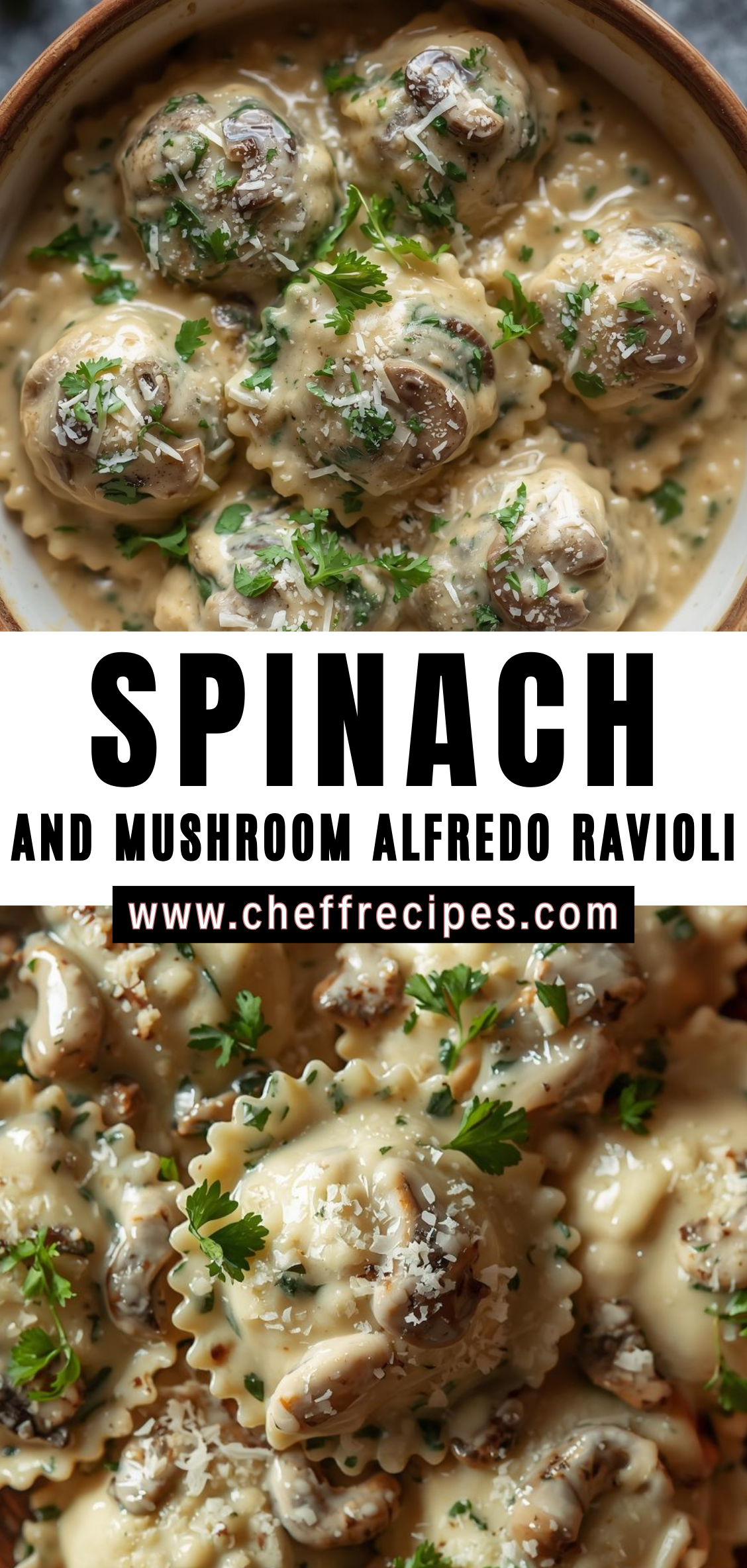
There are dishes that satisfy hunger, and there are dishes that speak to something deeper—comfort, memory, the pleasure of craftsmanship, and the quiet ceremony of cooking. Spinach and Mushroom Alfredo Ravioli belongs firmly to the latter category. It is a meal built not from speed or convenience but from intention: the deliberate kneading of dough, the patient sautéing of mushrooms until they surrender their earthiness, the gentle folding of wilted spinach into a creamy cheese mixture, and finally the luxurious drizzle of a well-made Alfredo sauce that transforms a humble plate of pasta into something undeniably indulgent.
Ravioli, as a culinary concept, has endured centuries of evolution. In its earliest recorded forms, it appeared in Italian manuscripts from the fourteenth century, described as small pillows of dough filled with herbs and fresh cheese. Over time, it absorbed regional influences—Liguria’s marjoram-scented variants, Emilia-Romagna’s meat-laden parcels, and the delicate ricotta-filled versions found across Tuscany. Yet the beauty of ravioli lies not in strict adherence to tradition but in its adaptability. It can be rustic or refined, filled with vegetables or meats, dressed in broths or sauces, served in the most humble kitchens or in rooms where white tablecloths whisper elegance.
The version explored in this recipe centers on the harmonious pairing of spinach and mushrooms, a combination that has long held its place in both Italian and broader European cuisines. Spinach lends a mild sweetness and a soft, verdant backbone that balances the deeper, more intense character of mushrooms. When sautéed properly, mushrooms develop an aromatic richness and a subtle nuttiness that complements the delicate flavors of fresh pasta dough. Bound together with creamy ricotta, a touch of Parmesan, and just enough seasoning to enhance without overwhelming, the filling becomes a study in understated luxury.
Alfredo sauce, though often simplified or misrepresented in contemporary cooking, plays a crucial role in this recipe. At its core, true Alfredo is a celebration of dairy: good butter, finely grated Parmesan, and sometimes cream, depending on regional interpretation and personal preference. When thoughtfully prepared, the sauce becomes more than a blanketing creaminess; it is smooth, warm, and cohesive, each strand of pasta or pocket of ravioli coated in a silky sheen that underscores the flavors within. The sauce in this recipe aims for balance—rich yet not heavy, creamy yet still allowing the distinct identities of spinach and mushroom to shine through.
This dish is not merely a combination of pasta, filling, and sauce. It is a testament to pacing and care. Making ravioli by hand encourages mindfulness: measuring, rolling, cutting, sealing, and cooking with considered attention. These actions transform the experience from routine cooking to something almost meditative. Each component contributes its own story to the final result. Fresh pasta dough speaks of tradition and texture. The filling tells of seasonality and the aromas of the kitchen. The Alfredo sauce embodies comfort and warmth. Together, they create a dish that is both hearty and elegant, suitable for a quiet weeknight meal or for impressing guests at a special gathering.
Moreover, Spinach and Mushroom Alfredo Ravioli exemplifies the way simple ingredients can yield extraordinary results when treated with respect. Flour, eggs, spinach, mushrooms, butter, and cheese—none are extravagant on their own, yet each becomes essential when combined with purpose. The recipe encourages cooks to observe these transitions: raw ingredients becoming pliable dough, firm mushrooms releasing their moisture, spinach collapsing into tender silkiness, cheese melting into cream. These transformations are reminders of why many people fall in love with cooking in the first place.
In the pages that follow, the recipe will unfold in a detailed, step-by-step format designed to guide both novice and experienced cooks through the process with confidence. You will learn how to prepare pasta dough with the right texture, how to assemble ravioli that hold their shape and do not burst during cooking, how to develop a flavorful filling, and how to create a balanced Alfredo sauce that complements rather than overwhelms. Additionally, you will find variations, troubleshooting tips, and insights into ingredient selection and technique—elements that help elevate the dish from simply good to truly exceptional.
Before delving into the ingredients and methods, it is worth pausing to appreciate what dishes like this represent. Cooking can be utilitarian, but it can also be expressive, personal, and nourishing in ways that stretch far beyond flavor. Preparing Spinach and Mushroom Alfredo Ravioli is an opportunity not just to create a meal but to slow down, engage the senses, and enjoy the tactile pleasures that define homemade pasta. It invites you to savor aromas as they develop, to feel the texture of dough under your palms, and to witness how patient attention yields both culinary and emotional rewards.
When served, the finished ravioli invite a kind of quiet satisfaction. They rest on the plate like small, delicate gifts—soft, warm, and fragrant. The Alfredo sauce cascades gently around them, contrasting creamy richness with the slight chew of fresh pasta. The filling inside offers a soft burst of flavor, earthy and fresh, comforting yet refined. It is a dish that feels complete in a way few meals truly do, offering sustenance, warmth, and the sense that something crafted with care always tastes better.
Instructions (Highly Detailed, Step-by-Step)
1. Preparing the Pasta Dough
1.1 Choosing and Measuring the Ingredients
For a traditional ravioli dough, simplicity is essential. You will need all-purpose flour, eggs, a touch of olive oil, and a pinch of salt. The flour should be fresh and dry, not compacted or clumpy. Weighing the flour—rather than relying solely on volume measurements—helps ensure consistency. A standard ratio is 100 grams of flour per large egg, and for this recipe, you will typically use 300–400 grams of flour for a batch that yields several dozen ravioli.
1.2 Creating the Dough Well
Pour the flour onto a clean work surface, using your hands to form a wide, shallow well. Make the walls sturdy enough to contain the eggs. Crack the eggs into the center, add the salt, and drizzle in the olive oil. Begin whisking the eggs gently with a fork, gradually pulling flour from the interior edges of the well into the mixture, allowing the dough to thicken slowly without breaking the wall and releasing the liquid prematurely. This slow incorporation prevents lumps and creates a smooth, cohesive dough.
1.3 Kneading the Dough
Once the dough becomes too thick for the fork, switch to your hands. Knead firmly, pressing down and away with the heels of your palms, folding the dough back onto itself, and repeating the motion. Continue for at least 8–12 minutes. Proper kneading develops gluten, which gives the pasta its structure and elasticity. The dough should become smooth, supple, and slightly tacky but not sticky. If it feels too wet, add small amounts of flour. If it feels overly dry or crumbly, lightly moisten your hands and continue kneading.
1.4 Resting the Dough
Shape the dough into a tight ball and wrap it securely in plastic wrap or place it in a covered bowl. Let it rest for at least 30 minutes at room temperature. This rest period relaxes the gluten, making the dough easier to roll out later. Skipping this step often results in dough that tears or springs back when rolled.
2. Preparing the Spinach and Mushroom Filling
2.1 Cleaning and Slicing the Mushrooms
Use fresh mushrooms—cremini, button, or a mix that may include shiitake for deeper flavor. Brush off dirt with a dry cloth or soft brush rather than rinsing, as mushrooms absorb water quickly and can become soggy. Slice them evenly to ensure uniform cooking.
2.2 Sautéing the Mushrooms
Heat a wide pan with a tablespoon of olive oil or butter. When the fat begins to shimmer, add the mushrooms in a single layer. Avoid overcrowding; mushrooms release moisture, and crowding will cause them to steam rather than brown. Allow them to cook undisturbed for several minutes before stirring. Browning enhances their flavor, concentrating their natural umami. Once they soften and reduce in volume, season lightly with salt, pepper, and optionally a bit of minced garlic or shallot. Cook until the moisture evaporates and the edges of the mushroom slices develop caramelization. Transfer to a bowl to cool.
2.3 Preparing the Spinach
Fresh spinach should be washed and dried thoroughly. Heat another pan with a small amount of oil, add the spinach, and cook until wilted. This will take only a minute or two. Transfer the spinach to a sieve or colander and press firmly with the back of a spoon or your hands once cool enough. Removing excess moisture is essential; watery spinach will destabilize the filling and may cause ravioli to burst during cooking.
2.4 Combining the Filling Ingredients
Chop the spinach finely. Add it to a mixing bowl with the cooled mushrooms, ricotta cheese, Parmesan, a pinch of nutmeg, salt, and pepper. Stir until the mixture is uniform. The texture should be thick and cohesive. If the filling seems too loose, add more Parmesan or allow it to rest in the refrigerator for 20 minutes; chilling helps firm the mixture.
3. Rolling Out the Pasta Dough
3.1 Dividing and Flattening
Unwrap the rested dough and cut it into manageable sections. Work with one portion at a time, keeping the remaining pieces wrapped to prevent drying. Flatten each piece into a disc with your hands or a rolling pin before feeding it through the pasta machine.
3.2 Using a Pasta Machine
Start at the widest setting. Pass the dough through once, then fold it into thirds like a letter, and run it again. This folding step helps align gluten strands and creates a smoother sheet. Continue decreasing the roller setting gradually, passing the dough through once at each level. Avoid skipping settings; reducing thickness too quickly may tear the dough. The final sheet should be thin enough to see shadows through it but sturdy enough to hold filling. Typically, this is the second-to-last or third-to-last setting on most machines.
3.3 Manual Rolling Option
If rolling by hand, work on a lightly floured wooden surface. Use a long wooden rolling pin and rotate the dough frequently. Aim for even thickness throughout, as thin or thick patches will affect cooking and filling distribution.
4. Assembling the Ravioli
4.1 Laying Out the Sheets
Lay one sheet of rolled dough on a lightly floured work surface. If you are using a ravioli stamp or mold, ensure the sheet is wide enough for the tool you plan to use. If you are cutting by hand, leave space between filling portions.
4.2 Adding the Filling
Use a teaspoon or piping bag to place small mounds of filling onto the dough. The spacing depends on the size of ravioli, but 1.5 to 2 inches apart is standard. Avoid making the mounds too large, as overfilled ravioli are more prone to bursting.
4.3 Moistening the Dough
Lightly brush the areas around the filling mounds with water or a beaten egg. This helps seal the top sheet to the bottom sheet. Be sparing; too much moisture can cause the dough to slip and prevent a tight seal.
4.4 Sealing the Ravioli
Lay a second sheet of pasta over the first, starting from one edge and gently pressing outward to expel any trapped air. Air pockets can expand during cooking and cause the ravioli to rupture. Firmly seal the dough around each mound with your fingers.
4.5 Cutting the Ravioli
Use a ravioli cutter, stamp, or sharp knife to separate the pieces. Press the edges again to ensure a complete seal. Place the finished ravioli on a semolina-dusted tray and cover them lightly with a cloth. Avoid stacking, as fresh ravioli stick easily.
5. Cooking the Ravioli
5.1 Preparing the Water
Fill a large pot with water and bring it to a steady boil. Salt generously; the water should taste like the sea. Proper seasoning here ensures the pasta itself carries flavor.
5.2 Boiling the Ravioli
Add the ravioli in small batches. Stir gently to prevent sticking. Fresh ravioli cook quickly, usually in 3–4 minutes. They are ready when they float to the surface and the dough becomes slightly translucent. Use a slotted spoon to remove them carefully and transfer them directly to the pan with Alfredo sauce.
6. Making the Alfredo Sauce
6.1 Building the Base
In a clean skillet or saucepan, melt butter over medium-low heat. Once melted, add heavy cream and bring the mixture to a gentle simmer. Stir occasionally to prevent scorching.
6.2 Incorporating the Cheese
Add grated Parmesan slowly, stirring until it melts and emulsifies with the cream. Keep the heat low; overheating can cause the sauce to separate. Adjust thickness by adding a splash of pasta water if it becomes too dense.
6.3 Seasoning
Taste and season with salt, pepper, and a hint of nutmeg. The goal is a smooth, velvety sauce that clings to the pasta without overwhelming it.
7. Combining and Serving
7.1 Coating the Ravioli
Transfer cooked ravioli into the warm Alfredo sauce. Toss gently, using a spoon rather than tongs to avoid tearing the pasta. The sauce should lightly envelop each piece.
7.2 Final Touches
If desired, add a scattering of fresh herbs—parsley or basil—along with an additional sprinkle of parmesan. Serve immediately while the sauce is at its optimal consistency and the ravioli remain tender.
Spinach and Mushroom Alfredo Ravioli
There are dishes that satisfy hunger, and there are dishes that speak to something deeper—comfort, memory, the pleasure of craftsmanship, and the quiet ceremony of cooking. Spinach and Mushroom Alfredo Ravioli belongs firmly to the latter category. It is a meal built not from speed or convenience but from intention: the deliberate kneading of dough, the patient sautéing of mushrooms until they surrender their earthiness, the gentle folding of wilted spinach into a creamy cheese mixture, and finally the luxurious drizzle of a well-made Alfredo sauce that transforms a humble plate of pasta into something undeniably indulgent.
Ingredients
- For the Ravioli Filling:
- 1 tablespoon olive oil
- 1 cup mushrooms, finely chopped
- 2 cups fresh spinach, roughly chopped
- 2 cloves garlic, minced
- ½ cup ricotta cheese
- ¼ cup grated Parmesan cheese
- Salt and black pepper, to taste
- 1 package fresh ravioli (cheese- or spinach-filled), about 1 pound
- For the Alfredo Sauce:
- 2 tablespoons unsalted butter
- 1 cup heavy cream
- 1 clove garlic, minced
- ½ cup grated Parmesan cheese
- Salt and black pepper, to taste
- Optional: pinch of nutmeg
- For Garnish:
- Extra Parmesan
- Chopped parsley
Instructions
1. Prepare the Filling
- Heat olive oil in a skillet over medium heat.
- Add the mushrooms and cook until softened and their moisture evaporates, about 5 minutes.
- Stir in the garlic and cook 1 minute until fragrant.
- Add the chopped spinach and cook until wilted.
- Remove from heat, cool slightly, and mix in ricotta, Parmesan, salt, and pepper.
- If using fresh lasagna sheets to make your own ravioli, fill and seal them now; otherwise, proceed using store-bought ravioli.
2. Cook the Ravioli
- Bring a large pot of salted water to a gentle boil. Add the ravioli and cook according to package instructions, usually 3–5 minutes, until they float.
- Reserve ¼ cup of pasta water, then drain and set aside.
3. Make the Alfredo Sauce
- In a saucepan, melt the butter over medium heat.
- Add the garlic and sauté for 30 seconds.
- Pour in the heavy cream and bring to a gentle simmer.
- Stir in the Parmesan until melted and smooth.
- Season with salt, pepper, and nutmeg if desired.
- If the sauce is too thick, thin with a splash of reserved pasta water.
4. Combine and Serve
- Add the cooked ravioli to the sauce and gently toss to coat.
- Serve hot, topped with extra Parmesan and parsley.
Notes
- Shortcut option: Use pre-made cheese ravioli and skip the filling step.
- Vegetarian variation: Replace Parmesan with a vegetarian hard cheese if needed.
- Add protein: Stir in cooked chicken, shrimp, or Italian sausage.
- Make it lighter: Substitute half-and-half or whole milk for part of the cream, though the sauce will be less rich.