There are certain culinary pairings that feel so natural, so intuitively right, that they seem almost predetermined—meant to exist together in the same pan. Brussels sprouts and hot bacon fall firmly into that category. Individually, each ingredient carries its own distinct personality: Brussels sprouts with their earthy, faintly nutty complexity, and bacon with its unmistakable smokiness and savory richness. But when they meet—especially in a dish that takes advantage of the heat, fat, and aroma released from freshly cooked bacon—the result is far greater than the sum of its parts. This recipe celebrates the harmony of those flavors, transforming a humble, often underestimated vegetable into a memorable star at the table.
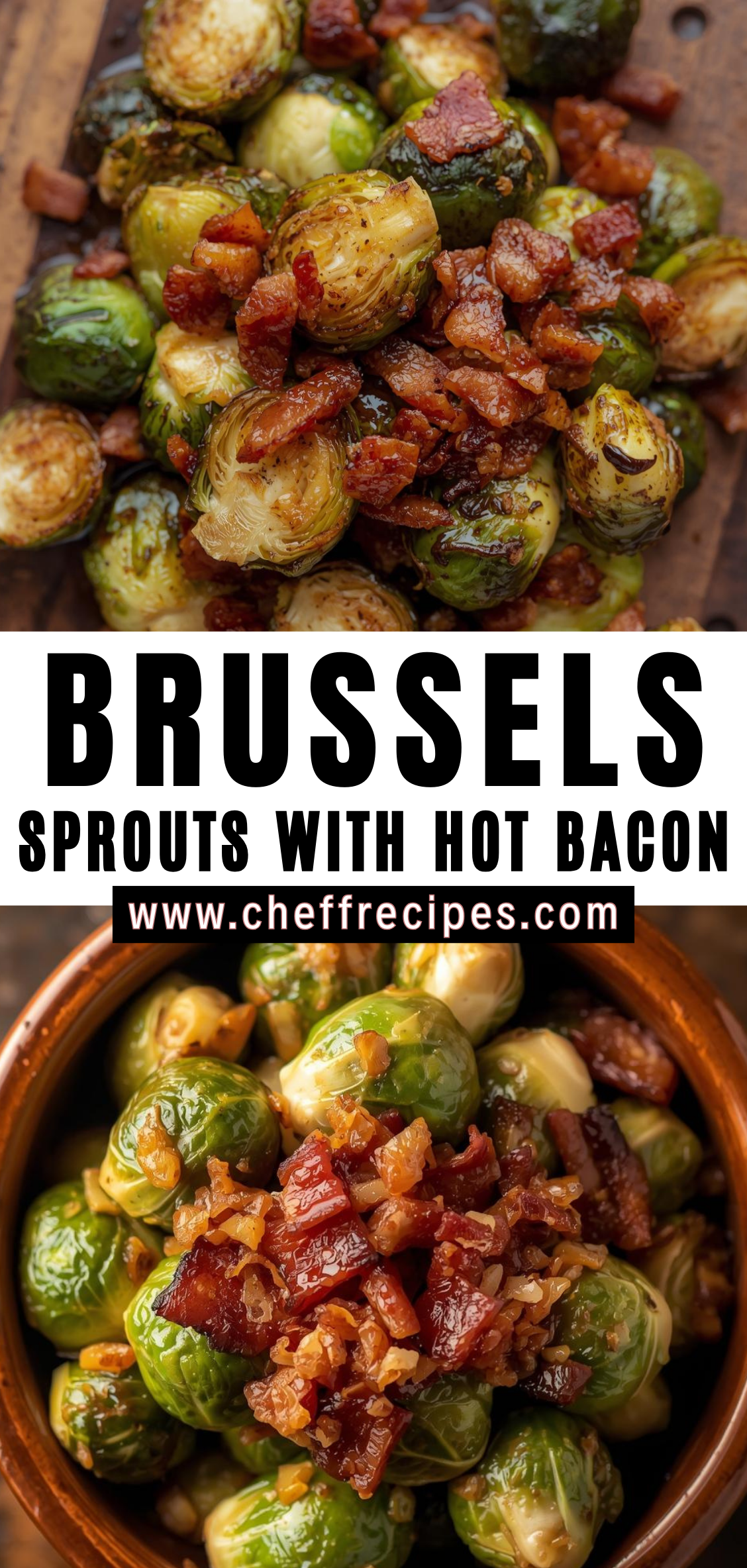
For years, Brussels sprouts suffered from a reputation shaped largely by overcooked, bitter versions that did little to showcase the vegetable’s true potential. Only in more recent decades, especially with the growing popularity of high-heat roasting and pan-searing techniques, have home cooks and chefs alike embraced what Brussels sprouts can truly offer. When exposed to the right kind of heat, the sprouts caramelize, their edges crisping as their natural sugars develop deeper flavor. This transformation creates a tender interior with a crackling exterior, making them an irresistible canvas for bold ingredients that complement their sweetness. And few ingredients do that as successfully as hot, freshly cooked bacon.
The role of the bacon in this recipe extends far beyond simple garnish. Its rendered fat becomes an integral part of the cooking medium, infusing the sprouts with layers of flavor that cannot be replicated with substitutes. That savory richness is balanced by optional additions—like vinegar for brightness, maple or brown sugar for a contrasting hint of sweetness, or mustard for a subtle tang—that help the dish land squarely between comforting and complex. The result is a side dish that feels hearty enough to satisfy on its own, yet versatile enough to stand beside roasted meats, poultry, or a holiday spread without losing its identity.
This introduction sets the stage for a recipe that is not only deeply flavorful but also highly adaptable. Whether you prefer your Brussels sprouts charred and crisp, tender and lightly glazed, or carried by bold acidic notes, the foundational combination of sprouts and bacon provides a baseline that welcomes variation. The recipe can be scaled to feed a crowd, simplified for a quick weeknight meal, or dressed up with additional ingredients such as shallots, garlic, chili flakes, toasted nuts, or even a splash of aged balsamic. Its flexibility ensures that once you understand the core technique—rendering the bacon, layering aromatics, managing heat, and finishing the sprouts with balance—you can adjust it to suit any occasion.
At its heart, however, this dish is about comfort. It’s about taking ingredients that are familiar and accessible, and treating them with enough intention and care to create something memorable. The smell of bacon sizzling in a pan, the sound of sprouts hitting the hot fat, the way their edges begin to brown almost immediately, the anticipation as the dish comes together—all of these small sensory moments contribute to why this recipe resonates with home cooks. It’s a recipe that invites you to slow down just enough to savor the process while still delivering quick, reliable results.
What follows in the full recipe and discussion will explore more than just the method; it will delve into ingredient selection, variations, serving strategies, storage tips, and the science behind why these flavors work so well together. But before getting to those details, it’s important to recognize the central idea: Brussels Sprouts with Hot Bacon is not merely a side dish. It is a reminder that simple ingredients, when treated thoughtfully, can create extraordinary flavor. This is a recipe that brings people back for second helpings, inspires curiosity from those who once believed they disliked Brussels sprouts, and earns a lasting place in the rotation of dishes worth making again and again.
Detailed Instructions
1. Prepare the Ingredients Carefully
Begin by assembling and prepping all components before you start cooking. This is essential because the dish moves quickly once the bacon hits the pan.
Brussels sprouts:
Inspect each sprout and trim off only the very end of the stem. Remove any loose or yellowing outer leaves. Slice each sprout in half lengthwise, ensuring the cut goes through the core so the leaves stay attached during cooking. For exceptionally large sprouts, consider cutting them into quarters so they cook at the same rate as smaller pieces. The goal is uniform size for even caramelization. Pat the sprouts dry with a clean towel; excess moisture prevents browning.
Bacon:
Choose thick-cut bacon if you prefer larger, meaty pieces in the final dish, or regular-cut if you want crisp, delicate pieces that disperse more evenly. Cut the strips crosswise into bite-sized pieces, about ½ inch wide. Keeping the pieces roughly the same size ensures even cooking and predictable fat rendering.
Aromatics and optional flavor elements:
If you plan to use shallots, garlic, red pepper flakes, mustard, vinegar, or a sweet note such as maple syrup or brown sugar, prepare these now. Mince your garlic finely so it cooks quickly without burning, and slice shallots thinly so they soften evenly. Measure seasonings in advance to avoid scrambling mid-recipe.
2. Render the Bacon Slowly for Maximum Flavor
Place a large, heavy-bottomed skillet—cast iron is ideal—on the stove and set the heat to medium. Add the bacon pieces to the cold pan. Starting in a cold pan is deliberate: it allows the fat to render gradually, producing crisp bacon and a flavorful cooking medium.
As the bacon heats, stir occasionally so the pieces brown evenly. Adjust the heat as needed; if the bacon begins to smoke aggressively or darken too quickly, lower the heat. You want thorough rendering, not scorching. The process may take 8–12 minutes depending on the bacon thickness and stovetop strength.
When the bacon is golden and crisp, use a slotted spoon to transfer the pieces to a plate lined with paper towels. Do not discard the rendered fat; this is the foundation of flavor for the entire dish. You should have a few tablespoons in the pan, enough to coat the Brussels sprouts generously. If you have considerably more than that, carefully pour some off into a heatproof container, reserving it in case you need a little extra later.
3. Build Aromatic Flavor (Optional but Highly Recommended)
If using shallots or garlic, reduce the heat slightly and add them to the hot bacon fat. Sauté until fragrant—about 30 seconds for garlic or 2 minutes for shallots. The aromatics should soften and release their fragrance without browning too deeply. This step infuses the fat with layered flavor that will cling to the Brussels sprouts as they cook.
If adding red pepper flakes for heat, sprinkle them in at this stage to bloom in the sizzling fat. This releases their oils and connects their flavor to the dish rather than simply sitting on top of it.
Once aromatics are fragrant, move immediately to the next step so none of them burn.
4. Sear the Brussels Sprouts for Deep Caramelization
Increase the heat to medium-high. Add the halved Brussels sprouts to the skillet, arranging them cut-side down in a single layer if possible. This initial contact with high heat creates the signature deep browning that gives the dish its savory depth.
Do not stir the sprouts right away. Let them sear undisturbed for 4–6 minutes, depending on their size and the heat level. You should hear a steady, vibrant sizzle—not a violent crackle or a weak whisper. Peek at one sprout; when the cut surface has developed a rich, brown crust, they’re ready for the next step.
If your skillet is not large enough to hold all the sprouts without crowding, cook them in batches. Overcrowding traps steam and prevents browning.
5. Stir and Cook Until Tender
Once the sprouts have caramelized on the cut side, stir them to expose different surfaces to the heat. Season lightly with salt and freshly cracked black pepper. Remember that bacon is naturally salty, so season with restraint at this stage.
Sauté the sprouts for an additional 5–8 minutes, stirring every 1–2 minutes. If the pan becomes too dry, add a teaspoon or two of the reserved bacon fat. Properly cooked Brussels sprouts should have crisped edges, golden coloration, and a tender center that yields easily to a fork.
If you prefer softer sprouts or have particularly large ones, splash in a tablespoon of water or broth and cover the pan for 2–3 minutes to create gentle steam. Remove the lid immediately after to prevent sogginess.
6. Deglaze or Glaze the Pan (Customize the Flavor Profile)
At this stage, you may choose to introduce an acidic or sweet component to balance the dish.
For brightness:
Add 1–2 teaspoons of apple cider vinegar, balsamic vinegar, sherry vinegar, or lemon juice. The acidity cuts through the richness of the bacon fat and enhances caramelization.
For sweetness:
A drizzle of maple syrup or a teaspoon of brown sugar helps create a light glaze that contrasts beautifully with the savory elements. Add sweetness sparingly; it should enhance, not overwhelm.
For depth:
A swirl of Dijon mustard, whole-grain mustard, or even a splash of Worcestershire sauce adds complexity.
After adding any liquid ingredient, immediately stir to coat the sprouts and allow the moisture to deglaze the pan. Scrape up the browned bits—these are packed with flavor.
Let the mixture cook for 1–2 minutes until the liquid reduces and clings lightly to the sprouts without pooling.
7. Return the Bacon to the Skillet
Add the crisp bacon pieces back into the hot Brussels sprouts. Toss thoroughly so the bacon is evenly distributed and reheated by the pan. The combination of textures—crispy bacon, caramelized sprouts, and any added glaze—should now feel cohesive.
Taste and adjust seasoning. You may want a bit more salt, a crack of pepper, or an extra dash of acidity depending on the balance of flavors and the salt content of your bacon.
8. Finish and Serve Immediately
Brussels Sprouts with Hot Bacon are at their peak the moment they leave the pan. Transfer them to a warm serving dish or platter. Any crisp bacon that falls to the bottom of the skillet should be scattered over the top for visual appeal and texture.
If desired, finish with a final touch such as:
-
A sprinkle of flaky sea salt
-
A squeeze of lemon
-
Toasted nuts like pecans or hazelnuts for added crunch
-
A small drizzle of aged balsamic for richness
Serve hot while the edges are still crisp and the bacon retains its crunch.
Brussels Sprouts with Hot Bacon
There are certain culinary pairings that feel so natural, so intuitively right, that they seem almost predetermined—meant to exist together in the same pan. Brussels sprouts and hot bacon fall firmly into that category. Individually, each ingredient carries its own distinct personality: Brussels sprouts with their earthy, faintly nutty complexity, and bacon with its unmistakable smokiness and savory richness. But when they meet—especially in a dish that takes advantage of the heat, fat, and aroma released from freshly cooked bacon—the result is far greater than the sum of its parts. This recipe celebrates the harmony of those flavors, transforming a humble, often underestimated vegetable into a memorable star at the table.
Ingredients
- 1 ½ pounds Brussels sprouts, trimmed and halved
- 6–8 slices thick-cut bacon, chopped
- 2 tablespoons olive oil or bacon drippings (as needed)
- 3 cloves garlic, minced
- 2 tablespoons apple cider vinegar
- 1 tablespoon honey or maple syrup
- Salt and black pepper, to taste
- Optional: pinch of red pepper flakes for heat
- Optional: ¼ cup chopped pecans or walnuts
- Optional: grated Parmesan for serving
Instructions
1. Prepare the Brussels Sprouts
- Rinse the Brussels sprouts, trim the ends, and cut them in half.
- Pat them dry to ensure crisp browning.
2. Cook the Bacon
- Place chopped bacon in a large skillet over medium heat.
- Cook until crispy, stirring occasionally.
- Remove the bacon with a slotted spoon and set aside, leaving the drippings in the pan.
3. Sauté the Brussels Sprouts
- Add olive oil if needed so you have about 2 tablespoons of fat in the pan.
- Add the Brussels sprouts cut-side down.
- Cook for 6–8 minutes without stirring to allow a deep sear.
- Stir and continue cooking until tender-crisp, about 5 more minutes.
4. Add Flavorings
- Add minced garlic and cook for 1 minute until fragrant.
- Stir in apple cider vinegar and honey/maple syrup.
- Season with salt, pepper, and red pepper flakes (if using).
- Return the cooked bacon to the pan and toss to combine.
5. Serve
- Taste and adjust seasoning as needed.
- Top with nuts or Parmesan if desired.
- Serve hot.
Notes
- For extra crispiness, finish the dish under the broiler for 2–3 minutes.
- If sprouts are large, quarter them for more even cooking.
- Swap apple cider vinegar for balsamic vinegar for a darker, sweeter glaze.
- To make it dairy-free, omit the Parmesan.
- Great side dish for holiday meals or weeknight dinners.