French Onion Butter Rice is a deceptively simple yet profoundly flavorful dish that transforms ordinary rice into a luxurious side or even a standalone meal. By combining the caramelized sweetness of French onions, the richness of butter, and the subtle aromatics of classic French seasoning, this dish elevates a humble grain into something both comforting and refined. While rice is often treated as a neutral accompaniment, French Onion Butter Rice demonstrates its potential as a canvas for complex flavors, blending the depth of French-inspired cooking with the accessibility of everyday ingredients.
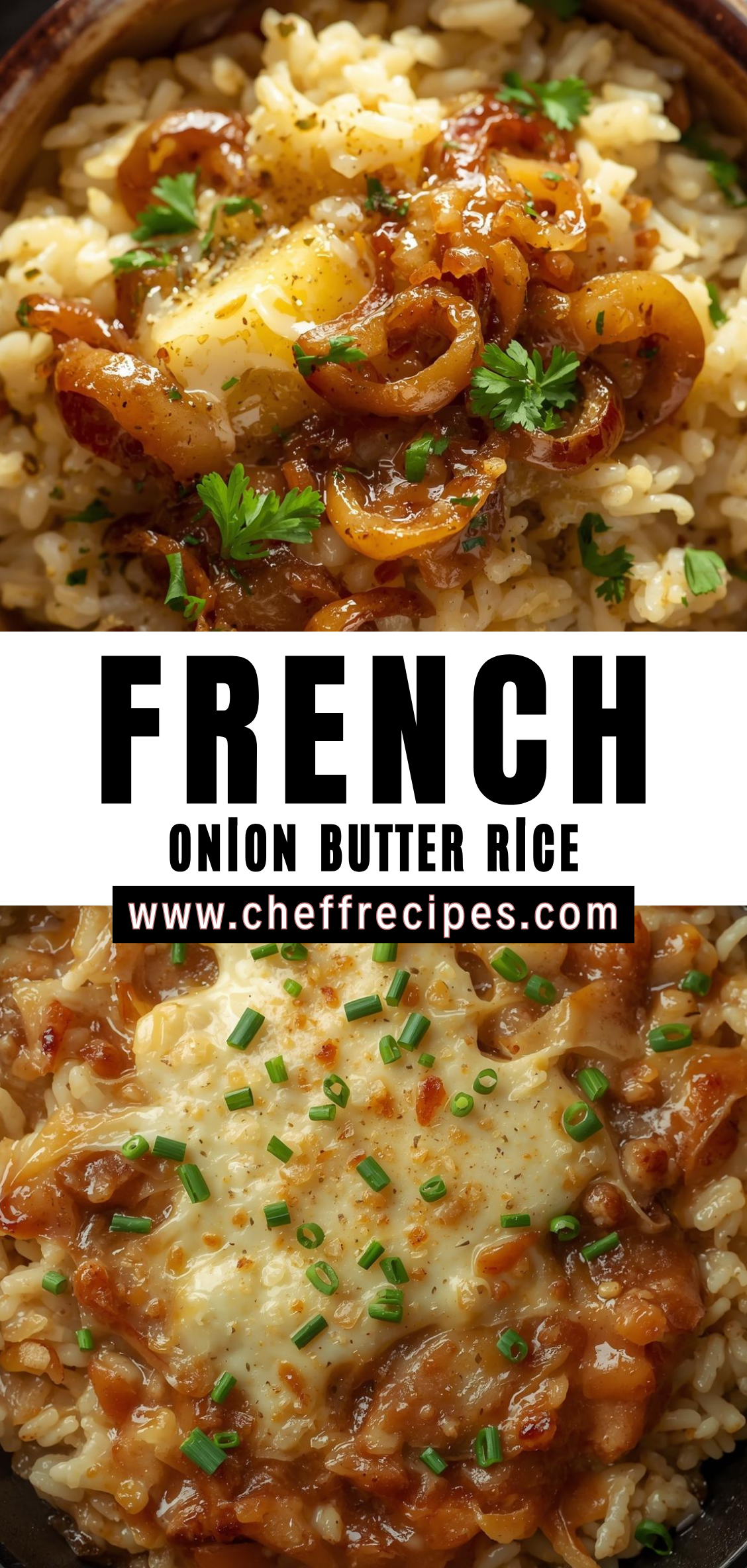
The inspiration for this dish comes from French onion soup, a culinary classic known for its caramelized onions, savory broth, and toasted bread topped with melted cheese. French Onion Butter Rice captures the essence of that soup without requiring the lengthy preparation or the broiling step, offering a more streamlined way to enjoy similar flavors. The onions are slowly caramelized to bring out their natural sweetness, then combined with butter and cooked rice, creating a rich, silky texture. The resulting dish is aromatic, satisfying, and remarkably versatile.
One of the key strengths of French Onion Butter Rice is its adaptability. It works as a side dish for roasted meats, seared poultry, or grilled vegetables, and it can also be served as a vegetarian main when complemented with sautéed mushrooms, herbs, or a fried egg. The recipe allows for both short-grain and long-grain rice, and the cooking method can be adjusted to suit stovetop, oven, or even rice cooker techniques. The butter, onions, and optional aromatics such as thyme or garlic are the foundation, but the dish welcomes subtle variations that can reflect seasonal ingredients or personal taste.
Beyond its flavor, French Onion Butter Rice embodies a philosophy of home cooking that values layering and balance. Caramelized onions provide sweetness and umami, butter adds richness and smoothness, and a finishing sprinkle of herbs or Parmesan can offer brightness and complexity. Each element is simple, but together they create a multidimensional taste experience that feels indulgent yet approachable. This attention to technique and flavor layering is what distinguishes French Onion Butter Rice from ordinary buttered rice, turning a staple into a dish worthy of special occasions or everyday enjoyment alike.
In addition, the dish exemplifies a broader trend in modern home cooking: the elevation of everyday ingredients through technique and seasoning. It reminds cooks that even basic pantry staples—rice, onions, butter—can become extraordinary with patience, attention to detail, and an understanding of how flavors develop. The slow caramelization of onions, for example, is a process that transforms their natural sugars, producing a rich, deep flavor that cannot be achieved through quick sautéing. When combined with butter, these onions coat each grain of rice, resulting in a dish that is both aromatic and texturally satisfying.
French Onion Butter Rice is also an example of culinary versatility and efficiency. It can be prepared ahead of time and reheated, making it suitable for meal prepping or for serving large gatherings. It pairs seamlessly with a wide variety of main courses, from roasted chicken to pan-seared steak, and it can even act as a base for grain bowls or layered casseroles. Its appeal lies not only in taste but in its adaptability, reliability, and ability to impress without requiring complicated techniques or exotic ingredients.
Ultimately, French Onion Butter Rice offers more than just a side dish; it is a celebration of flavor, technique, and the transformative potential of simple ingredients. It embodies the essence of comfort food while incorporating elements of French culinary finesse, demonstrating that with careful preparation, even the most humble foods can become extraordinary. This recipe guide will explore the historical roots, ingredient selection, cooking techniques, and step-by-step instructions necessary to create French Onion Butter Rice that is both deeply flavorful and consistently satisfying.
Step 1: Choosing and Preparing the Ingredients
-
Selecting the Rice
-
Type: Use long-grain white rice such as Basmati or Jasmine for a light, fluffy texture. Short-grain rice can work but will produce a creamier, stickier result.
-
Rinsing: Rinse the rice under cold water until the water runs clear. This removes excess surface starch, preventing clumping and ensuring each grain remains separate during cooking.
-
Measuring: For every cup of rice, plan on 1¾ to 2 cups of liquid, depending on the desired texture and rice variety.
-
-
Onion Selection
-
Yellow onions are preferred for their balance of sweetness and pungency.
-
Slice thinly and evenly to ensure uniform caramelization. Uneven slices can lead to some pieces burning while others remain undercooked.
-
-
Butter
-
Use unsalted butter to control salt levels. For deeper flavor, high-quality European-style butter can add richness and creaminess.
-
Melt the butter slowly to avoid browning too quickly, which could overpower the delicate sweetness of the onions.
-
-
Additional Aromatics and Seasonings
-
Garlic: Optional, minced or thinly sliced, added during the final stage of onion caramelization for a subtle aroma.
-
Thyme: Fresh thyme leaves provide an earthy note. If using dried thyme, add sparingly to avoid bitterness.
-
Salt and Pepper: Adjust gradually. Salt enhances sweetness, while freshly cracked black pepper adds subtle heat.
-
Step 2: Caramelizing the Onions
-
Heat a Heavy-Bottomed Skillet or Sauté Pan
-
Medium-low heat ensures onions cook slowly without burning. Cast iron or stainless steel pans are ideal for even heat distribution.
-
-
Add Butter
-
Melt 3–4 tablespoons of butter in the pan. Watch for foam, and do not allow it to brown before adding onions.
-
-
Add Onions and Stir
-
Add sliced onions in a single layer. Stir to coat evenly with butter.
-
Cook slowly, stirring every 3–5 minutes, for 25–40 minutes.
-
Patience is crucial: the onions will first become translucent, then golden, and finally rich, deep brown. Avoid rushing with high heat, as this will produce bitter, burnt flavors.
-
-
Optional Step: Deglaze
-
Once onions are caramelized, deglaze the pan with 1–2 tablespoons of water, white wine, or broth. This lifts fond from the pan and incorporates extra flavor into the onions.
-
-
Add Aromatics
-
Stir in garlic and thyme during the last 2–3 minutes of cooking. Be careful not to overcook garlic, as it burns faster than onions.
-
Step 3: Preparing the Rice
-
Combine Rice and Buttered Onions
-
Transfer the rinsed rice to a saucepan or continue in the skillet if it is large enough. Mix with 2–3 tablespoons of butter from the caramelized onion pan.
-
-
Toast the Rice (Optional)
-
Sauté rice with onions and butter for 2–3 minutes over medium heat. Toasting enhances nutty notes and prevents the rice from becoming mushy.
-
-
Add Liquid
-
Pour in the measured broth (chicken, vegetable, or water). Use 1¾ cups of liquid per cup of rice for a fluffier texture; use slightly more for softer, creamier rice.
-
Season lightly with salt and pepper.
-
-
Bring to a Boil, Then Simmer
-
Cover the saucepan with a tight-fitting lid.
-
Reduce heat to low and simmer for 15–20 minutes without lifting the lid. This ensures steam cooks the rice evenly.
-
Step 4: Finishing the Rice
-
Rest the Rice
-
After cooking, remove from heat and let it sit, covered, for 5–10 minutes. This allows the steam to redistribute, producing fluffy grains.
-
-
Fluff and Incorporate Additional Butter
-
Use a fork to gently fluff the rice.
-
Stir in an additional 1–2 tablespoons of butter for creaminess and shine.
-
-
Optional Enhancements
-
Sprinkle with freshly grated Parmesan, chives, or parsley for added flavor and color.
-
A few drops of truffle oil can elevate the dish into a more sophisticated, aromatic version.
-
Step 5: Serving Suggestions
-
As a Side Dish
-
Pairs well with roasted or pan-seared meats, such as chicken, steak, or pork chops.
-
Complements roasted vegetables or a crisp green salad for a balanced meal.
-
-
As a Main Dish
-
Add sautéed mushrooms, caramelized shallots, or roasted garlic for a vegetarian main course.
-
Serve with a poached or fried egg on top for added protein and richness.
-
French Onion Butter Rice
French Onion Butter Rice is a deceptively simple yet profoundly flavorful dish that transforms ordinary rice into a luxurious side or even a standalone meal. By combining the caramelized sweetness of French onions, the richness of butter, and the subtle aromatics of classic French seasoning, this dish elevates a humble grain into something both comforting and refined. While rice is often treated as a neutral accompaniment, French Onion Butter Rice demonstrates its potential as a canvas for complex flavors, blending the depth of French-inspired cooking with the accessibility of everyday ingredients.
Ingredients
- For the Chicken Filling
- 2 cups cooked, shredded chicken (rotisserie or poached)
- 1 cup shredded Mexican blend cheese (cheddar, Monterey Jack)
- ½ cup diced onion
- 1 tsp ground cumin
- ½ tsp chili powder
- Salt & pepper to taste
- For the Homemade Red Enchilada Sauce
- 2 Tbsp vegetable oil
- 2 Tbsp all-purpose flour
- 3 Tbsp chili powder
- 1 tsp ground cumin
- ½ tsp garlic powder
- ¼ tsp smoked paprika (optional)
- 2 cups chicken broth
- 1 (8 oz) can tomato sauce
- Salt to taste
- For Assembly
- 8–10 corn or flour tortillas (6-inch)
- 1½ cups shredded cheese (Mexican blend or mozzarella)
- Chopped fresh cilantro (optional)
- Sliced avocado, sour cream, or lime wedges for serving
Instructions
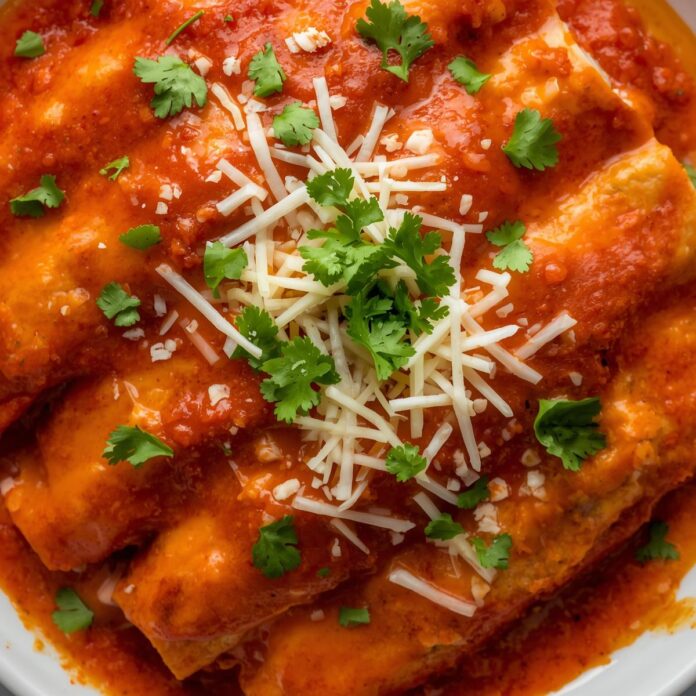
1. Make the Enchilada Sauce
- Heat oil in a medium saucepan over medium heat.
- Whisk in flour and cook 1 minute to make a roux.
- Add chili powder, cumin, garlic powder, smoked paprika; cook 30 seconds to bloom spices.
- Slowly whisk in chicken broth and tomato sauce until smooth.
- Simmer for 8–10 minutes, stirring occasionally, until slightly thickened.
- Season with salt to taste.
2. Prepare the Filling
- In a bowl, combine shredded chicken, 1 cup cheese, diced onion, cumin, chili powder, salt, and pepper.
- Mix until evenly combined.
3. Assemble the Enchiladas
- Preheat oven to 375°F (190°C).
- Lightly grease a 9×13 baking dish.
- Warm tortillas slightly to make them pliable (microwave 20–30 seconds or on a skillet).
- Spoon 2–3 Tbsp chicken filling onto each tortilla, roll tightly, and place seam-side down in the dish.
- Pour enchilada sauce evenly over the rolled tortillas.
- Sprinkle remaining ½–1 cup cheese on top.
4. Bake
- Cover with foil and bake 20 minutes.
- Remove foil and bake an additional 5–10 minutes until cheese is melted and bubbly.
5. Serve
Garnish with cilantro, avocado slices, sour cream, or a squeeze of lime.
Notes
- Sauce tips: Homemade enchilada sauce can be made ahead and stored in the fridge up to 5 days.
- Chicken shortcut: Rotisserie chicken or leftover roasted chicken works perfectly.
- Make ahead: Assemble in the dish, cover tightly, and refrigerate up to 24 hours; bake an extra 5–10 minutes.
- Spice adjustments: Add cayenne or chipotle powder to the sauce for extra heat.
- Tortilla tips: Slightly frying or warming corn tortillas prevents them from cracking while rolling.
- Freezer-friendly: Assemble and freeze before baking; thaw in the fridge overnight and bake as directed.