Homemade applesauce is one of those timeless dishes that evokes both comfort and simplicity. Its sweet, gently spiced flavor carries a sense of nostalgia, recalling warm kitchens, autumn harvests, and the subtle satisfaction of cooking with fresh ingredients. Among the many methods to prepare this classic treat, the crockpot—or slow cooker—stands out as a particularly convenient and reliable tool. Using a crockpot allows the natural sweetness and aromas of apples to develop fully over several hours without constant attention, producing a deeply flavorful, silky applesauce that far surpasses most store-bought varieties.
Cinnamon, one of the most beloved and widely used spices in global cuisine, elevates applesauce from simple fruit puree to a fragrant and comforting treat. The warm, slightly sweet, and aromatic notes of cinnamon harmonize perfectly with the natural acidity and sweetness of apples. This combination not only creates a dessert or snack that is satisfying on its own but also lends itself to countless culinary applications. Cinnamon-spiced applesauce can be enjoyed as a topping for pancakes, stirred into oatmeal, paired with roasted pork, or used as an ingredient in baked goods, enhancing flavor and moisture.
The beauty of using a crockpot lies not only in convenience but also in the gentle, consistent cooking environment it provides. Unlike stovetop methods that require careful monitoring to avoid burning or uneven cooking, a slow cooker allows apples to simmer slowly, releasing their juices and softening to the perfect texture. Over several hours, the apples break down naturally, creating a creamy and uniform sauce without the need for artificial thickeners or preservatives. This method also allows the spices to infuse gradually, resulting in a nuanced flavor profile that is difficult to achieve with quicker cooking methods.
Apples themselves offer a wide range of possibilities. Different varieties—such as Fuji, Honeycrisp, Gala, or Granny Smith—bring unique levels of sweetness, tartness, and texture to the finished product. A mix of varieties can balance flavor and create a more complex, layered taste. The choice of apples, combined with the cinnamon and optional additions like nutmeg, cloves, or a hint of vanilla, allows each cook to tailor the applesauce to their personal preference, dietary needs, or the intended use of the sauce.
In addition to flavor, crockpot cinnamon applesauce embodies nutritional benefits and versatility. Apples are rich in fiber, vitamins, and antioxidants, while cinnamon contributes not only aromatic complexity but also potential health benefits, including antioxidant properties and support for healthy blood sugar regulation. When prepared at home, this applesauce can be enjoyed without added sugars or preservatives, making it a wholesome option for children, adults, and those seeking a healthier alternative to commercial sauces.
Beyond its culinary and nutritional advantages, crockpot cinnamon applesauce is a recipe that fits effortlessly into modern lifestyles. It is a dish that allows for hands-off cooking, freeing time for other tasks while filling the home with a comforting aroma that signals warmth, care, and the joy of homemade food. The simplicity of the ingredients—apples, cinnamon, and optional natural sweeteners—underscores a philosophy of mindful, intentional cooking, where high-quality results do not require elaborate techniques or expensive tools.
This comprehensive guide will explore every aspect of making crockpot cinnamon applesauce, from selecting the right apples and spices to mastering texture, flavor, and consistency. We will cover preparation tips, variations, storage methods, uses in other recipes, and troubleshooting advice to ensure every batch turns out perfectly. By understanding the science behind slow cooking, flavor infusion, and natural sweetness, you will gain the confidence to customize this versatile sauce to your taste and needs.
By the end of this guide, you will not only have a reliable, foolproof crockpot cinnamon applesauce recipe but also the knowledge to adapt it creatively, making it a regular staple in your kitchen. Whether used as a snack, dessert, breakfast accompaniment, or ingredient in baked goods, this applesauce demonstrates how a simple combination of apples and cinnamon, prepared with care, can become a beloved, multifunctional dish. Its comforting aroma, rich flavor, and wholesome qualities make it an enduring favorite, and this recipe ensures that every batch is as satisfying and flavorful as possible.
Detailed Instructions
Step 1: Select and Prepare the Apples
The foundation of excellent applesauce begins with choosing the right apples. Select firm, ripe apples with minimal bruising. Varieties such as Fuji, Honeycrisp, Gala, or Pink Lady offer natural sweetness, while Granny Smith apples contribute a refreshing tartness. For the most complex flavor, combine sweet and tart apples in a 2:1 ratio.
Wash the apples thoroughly under cold running water to remove dirt, wax, or pesticides. Peel the apples if you prefer a smoother, uniform texture, or leave the skins on for added fiber and natural color. Core the apples carefully, removing seeds and tough centers. Slice the apples into uniform pieces—roughly one-inch cubes—to ensure even cooking. Uniform sizing helps all pieces break down consistently during the slow-cooking process, preventing some apples from becoming mushy while others remain firm.
Step 2: Prepare the Crockpot
Line the crockpot with a removable liner if available, or lightly grease the interior with a small amount of neutral oil or nonstick spray. This prevents sticking and makes cleanup easier. Set the crockpot to low or medium heat, depending on how much time you have. Low heat will produce a deeper, more caramelized flavor over 6–8 hours, while medium heat will cook the apples faster in 3–4 hours but may yield slightly less nuanced sweetness.
Step 3: Combine Apples and Spices
Place the prepared apple pieces into the crockpot. Add cinnamon generously, typically 1–2 teaspoons for every 4 cups of apples, adjusting to taste. Optionally, add other spices such as nutmeg, ground cloves, or ginger for additional warmth and complexity. These spices infuse gradually during slow cooking, so even small amounts can develop noticeable depth in the finished sauce.
Stir the apples and spices together to ensure even coating. This initial mixing ensures that the cinnamon and any other spices are distributed throughout the apples, preventing pockets of overly spiced or bland flavor. For a slightly sweeter sauce, add natural sweeteners such as maple syrup, honey (for non-vegan versions), or brown sugar, keeping in mind that apples themselves release significant natural sugars as they cook.
Step 4: Add Liquid for Moisture
Add a small amount of liquid to the crockpot to facilitate even cooking and prevent sticking. Water is the most neutral option, but unsweetened apple juice, pear juice, or a light fruit cider can enhance the natural sweetness and aroma. Typically, 1/4 to 1/2 cup of liquid per 4 cups of apples is sufficient. The apples will release their own juices during cooking, so avoid adding too much liquid, which can result in a watery sauce.
Optional: a small splash of lemon juice can be added at this stage. Lemon juice balances the sweetness, enhances the apple flavor, and helps preserve the color of the sauce by slowing oxidation.
Step 5: Cover and Cook Slowly
Place the lid securely on the crockpot and allow the apples to cook undisturbed. Avoid lifting the lid frequently, as this releases heat and extends cooking time. Low and slow cooking allows the apples to soften gradually, releasing natural pectin and sugars to create a thick, flavorful sauce without stirring.
Check periodically after the minimum cooking time to assess texture. Apples should be soft enough to mash easily with a fork or potato masher. Cooking times vary based on apple type, size, and crockpot model.
Step 6: Mash or Puree the Applesauce
Once the apples are tender, remove the lid and begin breaking down the mixture. For chunky applesauce, use a potato masher to crush the apples to your desired consistency. For smooth applesauce, use an immersion blender directly in the crockpot, or transfer small batches to a regular blender.
Taste the sauce at this stage and adjust sweetness or spice as needed. This is the ideal moment to add additional cinnamon, nutmeg, or sweeteners because the heat helps meld flavors. Stir thoroughly after adjustments to ensure a uniform flavor profile.
Step 7: Optional Flavor Enhancements
For additional depth and aroma, consider adding:
-
Vanilla extract (1 teaspoon) for warmth and complexity
-
A pinch of salt to balance sweetness
-
A splash of orange juice or zest for subtle citrus notes
These optional ingredients should be added after mashing or blending and stirred in gently to prevent overmixing, which can alter texture.
Step 8: Taste and Adjust for Texture
Crockpot applesauce can vary from slightly chunky to fully smooth. If the sauce is too thick, stir in small amounts of liquid (water, juice, or cider) until reaching the desired consistency. If too thin, continue cooking uncovered on low heat for an additional 15–30 minutes to reduce excess liquid.
Stirring occasionally during the final stages ensures even consistency and prevents sticking to the bottom of the crockpot.
Step 9: Cool and Store the Applesauce
Allow the applesauce to cool to room temperature before transferring to storage containers. For short-term use, refrigerate in airtight containers for up to 7–10 days. For long-term storage, freeze in freezer-safe containers or bags for up to 3 months. Label containers with the date and optional flavor notes for easy reference.
To maintain texture and flavor during freezing, leave a small space at the top of containers, as applesauce expands slightly when frozen. Thaw overnight in the refrigerator before reheating.
Step 10: Serve and Enjoy
Crockpot cinnamon applesauce can be served warm or cold. Warm applesauce is comforting on its own or as a topping for oatmeal, pancakes, yogurt, or roasted meats. Chilled applesauce can be enjoyed as a refreshing snack or incorporated into baked goods like muffins, cakes, or breads.
For presentation, garnish with a sprinkle of cinnamon, chopped nuts, or a light drizzle of maple syrup. The aroma of cinnamon-spiced applesauce enhances the sensory experience, making it an inviting dish for family meals, potlucks, or holiday gatherings.
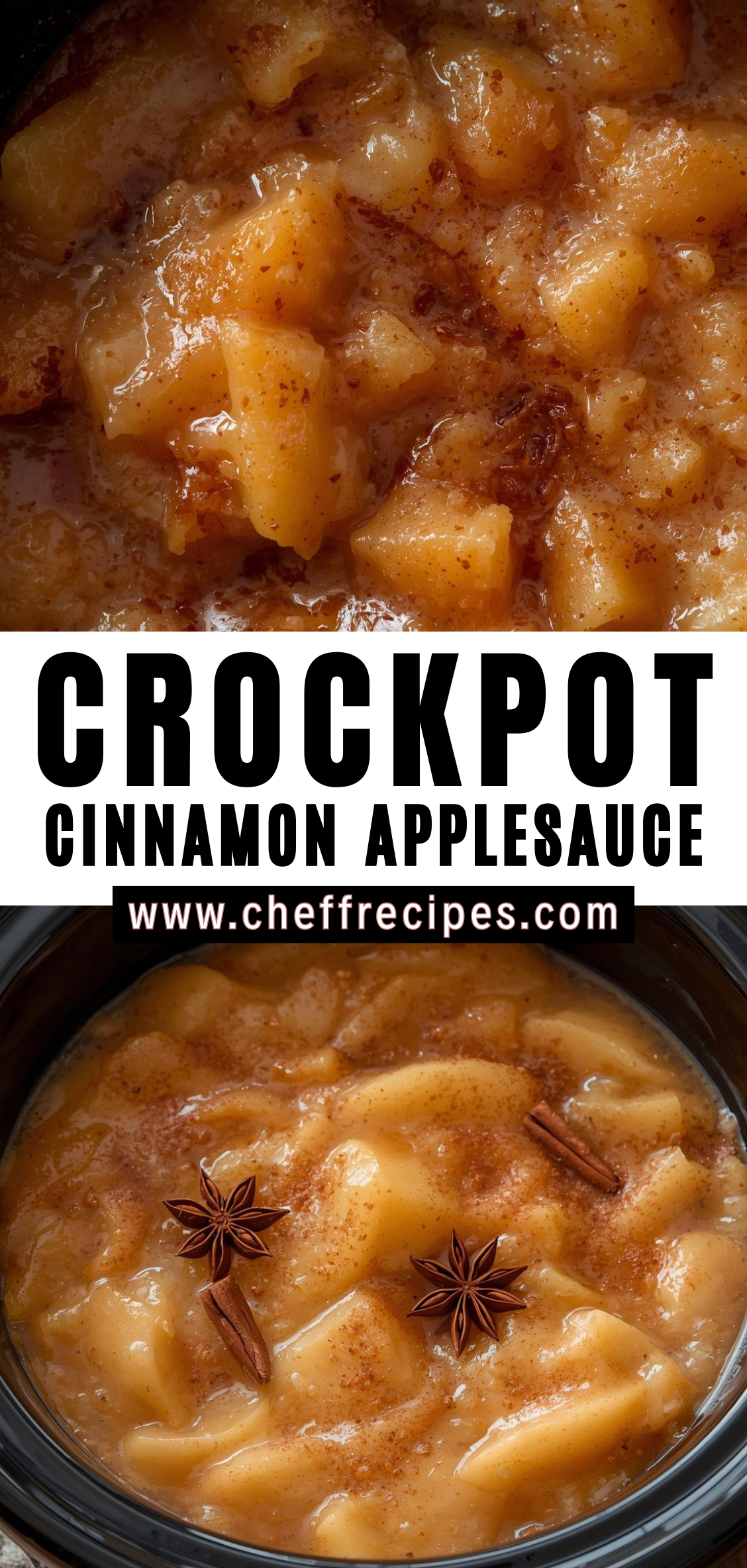
Crockpot Cinnamon Applesauce
Homemade applesauce is one of those timeless dishes that evokes both comfort and simplicity. Its sweet, gently spiced flavor carries a sense of nostalgia, recalling warm kitchens, autumn harvests, and the subtle satisfaction of cooking with fresh ingredients. Among the many methods to prepare this classic treat, the crockpot—or slow cooker—stands out as a particularly convenient and reliable tool. Using a crockpot allows the natural sweetness and aromas of apples to develop fully over several hours without constant attention, producing a deeply flavorful, silky applesauce that far surpasses most store-bought varieties.
Ingredients
- 6–8 medium apples (any sweet-tart variety, like Fuji, Gala, or Honeycrisp), peeled, cored, and chopped
- ½ cup water (or apple juice for extra sweetness)
- 2–4 tablespoons brown sugar or maple syrup (optional, adjust to taste)
- 1 teaspoon ground cinnamon
- ½ teaspoon ground nutmeg (optional)
- 1 teaspoon vanilla extract (optional)
- Pinch of salt
Instructions
1. Prepare the Apples
- Peel, core, and chop the apples into small chunks.
- Place the apples in the crockpot.
2. Add Liquids and Spices
- Pour in the water (or apple juice).
- Sprinkle with cinnamon, nutmeg (if using), brown sugar or maple syrup, and a pinch of salt.
- Stir gently to combine.
3. Cook the Apples
- Cover the crockpot with the lid.
- Cook on low for 4–5 hours or high for 2–3 hours, stirring once or twice if possible.
- The apples should be very soft and starting to break down.
4. Mash or Blend
- For chunky applesauce, use a potato masher to mash the apples to your desired consistency.
- For smooth applesauce, use an immersion blender or transfer to a regular blender and puree.
- Stir in vanilla extract if using.
5. Serve and Store
- Serve warm or chilled.
- Store leftovers in an airtight container in the refrigerator for up to 1 week or freeze for up to 3 months.
Notes
- Choose sweeter apples for a naturally sweet sauce; tart apples balance the flavor nicely.
- Adjust sugar or maple syrup depending on your sweetness preference.
- Add a splash of lemon juice to enhance flavor and preserve color.
- This recipe can be easily doubled for larger batches.